Empowering Tomorrow’s Health Leaders: A Pathway to Becoming an RDN

Discover your path to success in nutrition and dietetics with SHP’s innovative Master’s degree in Clinical Nutrition. Our program is designed to meet the evolving demands of the profession, whether you are completing an undergraduate degree in nutrition or changing your career. The completion of our program equips you with the skills and knowledge which results in earning a M.S. degree and a verification statement to sit for the registration examination for dietitians.

Why Study Clinical Nutrition at SHP?

Our graduates will be prepared to meet a growing demand for well-educated Registered Dietitian Nutritionists who have expertise in evidence-based nutrition care.

$80,630
* average salary of a Clinical Nutrition graduate.

* U.S. Bureau of Labor Statistics
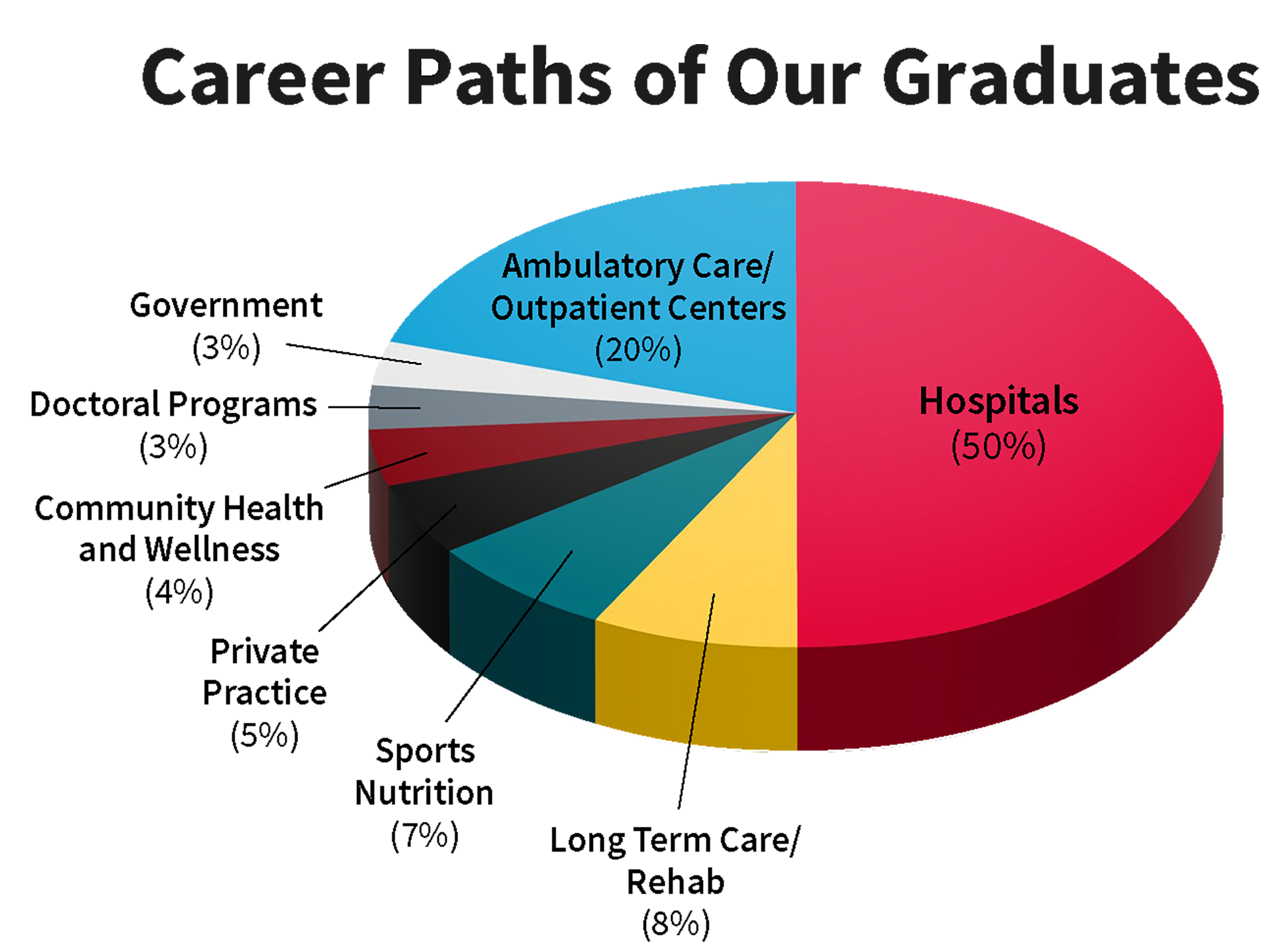
Chart of Career Paths of Clinical Nutrition graduates

Program Highlights

  • Graduates from any bachelor’s degree program can apply for this “pre-professional” master’s program.
  • A master’s degree program with an emphasis in clinical nutrition integrating 11 credits of supervised practice.
  • Experiences include hospitals, long-term care, rehab, health and wellness and ambulatory settings such as dialysis, diabetes, eating disorders, oncology, pediatrics, sports nutrition, weight management and more.
  • 41-credit program spanning 16 continuous months or just 4 semesters, including courses and supervised practice.
  • Students choose from local (Rutgers NJ sites) and remote tracks for supervised practice.
  • Study materials and end of program workshop to help prepare you for the RDN Exam which has resulted in an exceptional pass rate on the RDN exam!
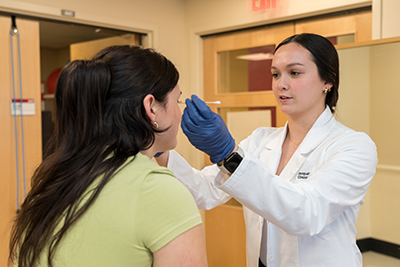
M.S. in Clinical Nutrition: For Aspiring Dietitians

Learning Beyond the Classroom

Clinical & Preventive Nutrition Clinical Sites

Students are placed at facilities affiliated with Rutgers and never have to worry about obtaining a site or contract. We do that for you! We assign students to clinical sites based on previous experience in clinical settings, and site requirements. We carefully think about placements to ensure our students have the best experiences and outcomes. Students are able to rank top preferences for outpatient experiences.

Program Overview
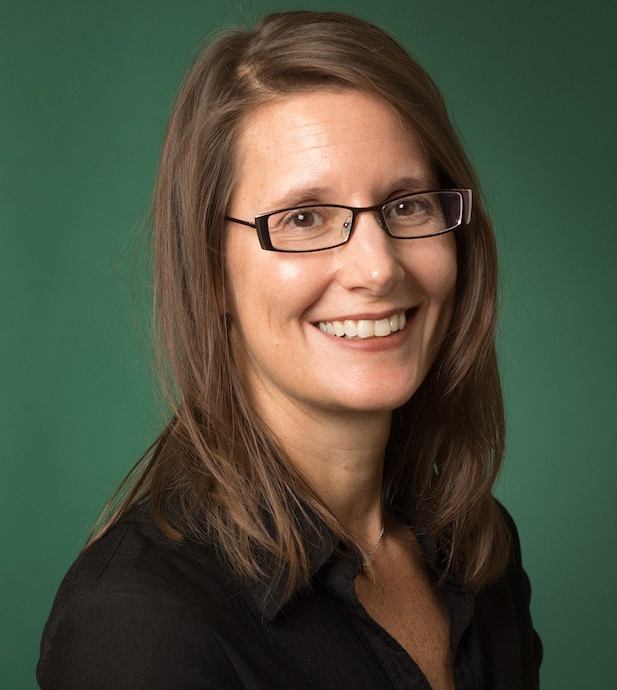
Program Director, Jennifer Tomesko

Program Director
Dr. Jennifer Tomesko

Students will learn critical thinking and scientific skills needed for clinical dietetics practice, management, research, and leadership. The master’s degree in clinical nutrition instills an appreciation for interprofessional collaboration and education, and provides opportunities to achieve expanded roles in health promotion, disease prevention, and intervention for a multi-cultural society.

Upon completion of the program, students earn a Master of Science in Clinical Nutrition degree and are eligible to take the Commission on Dietetic Registration’s Registration Examination for Dietitians.

Faculty members serve as role models in dietetics education, practice, and research, along with providing leadership and service to the profession.

Remote sites include: Long Beach, CA; Fort Wayne, IN; Indianapolis, IN; New Orleans, LA; Albuquerque, NM; Lebanon and Wilkes Barre, PA.

Mission Statement: The mission of the MSCN is dedicated to the pursuit of excellence in nutrition and dietetics education, clinical practice, research, and service.  Our definition of clinical practice is adopted from the Commission on Dietetic Registration (CDR) and is the provision of direct nutrition care to individuals and/or groups which encompass nutrition care in any practice setting.  We will prepare students in an online learning environment with virtual face-to-face (F2F) seminars and innovative experiential learning to become registered dietitian nutritionists (RDNs) providing client and patient-centered, interprofessional, and evidence informed and based nutrition care

Goal One: Prepare graduates to be competent, entry-level registered dietitian nutritionists (RDNs) who will meet the employment needs of New Jersey, the nation, and international communities.

Objectives for Goal One:

  • At least 80% of program students complete program/degree requirements within 2 years (150% of the program length).
  • Of graduates who seek employment, at least 70% are employed in nutrition and dietetics or related fields within 12 months of graduation.
  • During their first year of employment, program graduates will be ranked by at least 80% of employers who respond to our employer survey as “satisfactory” or better in professional knowledge and skills as compared to the expected competency of entry-level RDNs.
  • The program’s one -year pass rate (graduates who pass the registration exam within one year of first attempt) on the CDR credentialing exam for dietitian nutritionists is at least 80%.
  • At least 90% of program graduates take the CDR credentialing exam for dietitian nutritionists within 12 months of program completion.
  • At least 90% of program graduates who respond to the alumni survey will indicate that they collaborate inter-professionally in client/patient-centered care activities.

Goal Two: Prepare graduates to utilize and apply evidence-based and evidence-informed research in professional practice.

Objectives for Goal Two:

  • At least 85% of program graduates who respond to the alumni survey will indicate that they routinely use current evidence-based and informed research findings in professional practice.
  • At least 75% of program graduates who respond to the alumni survey will indicate that they apply the evidenced-based and informed research process to make decisions in professional practice

Program outcomes data are available upon request.

Accreditation
While state interpretations of statutes may vary, it is ACEND’s considered opinion that the program meets the educational requirements for dietetics licensure and certification in all states. However, completing an ACEND-accredited academic program alone does not qualify an individual for licensure or certification as a dietitian in any state. Individuals should review their state’s licensing statutes and regulations to understand the specific requirements, including supervised practice and examinations, needed to obtain a dietetics license. More information about state licensure and certification can be found at this link: State Licensure.
For further information on ACEND accreditation, contact:
Accreditation Council for Education in Nutrition and Dietetics
120 South Riverside Plaza
Suite 2190
Chicago, Illinois 60606-6995
Phone (800)-877-1600 ext 5400
E-mail: acend@eatright.org
www.eatright.org/ACEND

Admission Criteria

All applicants who submit the requisite application materials and meet the admission criteria will be reviewed. Candidates for admission will be required to participate in a virtual (F2F) interview via a video conferencing platform.

Priority Applicants October 1: Virtual interviews held in November and priority admission decisions given by November 1.

Regular Applicants February 1: Virtual interviews held in February and regular admission decisions given by March 1.

Applicants for the master’s degree in clinical nutrition program apply to either the local or remote track:

  • Local track refers to Rutgers affiliate sites for supervised practice located in New Jersey.
  • Remote track refers to supervised practice at sites greater than 100 miles from the Rutgers SHP Newark campus. Remote applicants must be willing to relocate for clinical clerkships in late March- through December to complete Clinical Nutrition/Dietetics Clerkships I, II and III.

The maximum class size is 50 students between our local and remote tracks.

All applicants who submit the requisite application materials and meet the admission criteria will be reviewed.  Candidates for admission will be required to participate in a virtual (F2F) interview via a video conferencing platform.

  • Submit application at Dietetic Inclusive Central Application Service (DICAS), http://dicas.liaisoncas.com
  • Resume or CV
  • Didactic Program in Dietetics (DPD) verification statement or transcripts demonstrating completion of all prerequisites
  • Two letters of recommendation from professors or academic advisors
  • Official transcripts from all post-secondary institutions
  • B.S. degree from a regionally accredited U.S. college or university; international students must provide TOEFL or IELTS scores and international transcript evaluation records
  • Personal statement (up to 750 words) with short and long-term career goals
  • Complete Supplemental Application** form in DICAS indicating local or remote track (if remote track, please rank your top 3 city preferences.)
  • Candidates for admission will be scheduled for an interview with our selection committee via F2F virtual interview (to be scheduled following review of complete application

*International applicants must obtain an official evaluation of their credentials unless applicants have a degree or sufficient coursework from a regionally accredited U.S. college or university. International applicants must take the Test of English as a Foreign Language (TOEFL) or International English Language Testing System (IELTS) and achieve a minimum score of 550 or higher on the TOEFL or 6.5 or higher on the IELTS. They must also submit an official copy of a transcript evaluation by a recognized transcript evaluation agency such as World Education Services (WES) or similar transcript evaluation service in addition to the previously stated admission requirements.

Prerequisite Courses

Anatomy and Physiology
General Chemistry
Introduction to Nutrition
Food Service Management
Experimental Foods
Microbiology
Organic Chemistry
Biochemistry
Human Nutrition or Metabolism ( Micronutrient/Macronutrient Metabolism)

Program prerequisites include either completion of a U.S. DPD or all of the prerequisites courses listed below.  Program prerequisites may be completed at any accredited institutions. Students will need to have achieved a grade of B or better in all prerequisite courses.

SHP offers five prerequisite courses. Information on the courses can be found here.

If you wish to register as a non-matriculated student, please go to: https://shp.rutgers.edu/center-for-advanced-and-continuing-education/

For more information, please contact Fabricio Salas at elmscn@shp.rutgers.edu.

Complete DICAS application
Three ways to meet MSCN admissions criteria
Breakdown of application requirements
DIDACTIC PROGRAM IN DIETETICS (DPD) APPLICANT PREREQUISITE APPLICANT WITH BACHELORS + NINE PREREQUISITES INTERNATIONAL APPLICANT WITH BACHELORS + NINE PREREQUISITES
Personal Statement Grade minimum of B in prerequisite courses Grade minimum of B in prerequisite courses
Resume Personal Statement Personal Statement
Official Transcripts from all post-secondary institutions Resume Resume
DPD Verification Statement or Declaration of intent Transcripts showing completion and/or enrollment of prerequisite courses in addition to Official Transcripts from all post-secondary institutions Course by course evaluation by members of NACES (i.e. WES) and Official Transcripts
Two letters of Recommendation Two letters of Recommendation Two letters of Recommendation
Supplemental Application Supplemental Application TOEFL score if needed
Virtual interview scheduled October (priority) or February (regular) if above criteria met Grade Virtual interview scheduled October (priority) or February (regular) if above criteria met Supplemental Application
Virtual interview scheduled October (priority) or February (regular) if above criteria met

SHP Tuition and Fees

For Tuition and Fees, please see the Graduate Tuition and Fees.
(Scroll down to 2025-2026 Rutgers Health Tuition and Fee Rates and click on School of Health Professions)
For Financial Aid information, please visit https://scarlethub.rutgers.edu/financial-services/

Program Specific Costs

Program specific costs for students in both the local and remote track are the same with the exception of the travel requirements and possible costs for relocation for local and remote students during the supervised practice semesters.

Remote track students will also need to cover the costs of the three campus visits to Rutgers for air/train fare, food and lodging whereas local students will only have local travel.

Student Membership in Academy of Nutrition and Dietetics
Membership must be active with the Academy of Nutrition and Dietetics by the start of the program. Student membership is $58 per year, which equates to $116 for two years. Students must maintain membership for the duration of enrollment in the MSCN.

Lab Coats
Students will need a lab coat for supervised practice sites. Estimated cost for 1 lab coat is $50.

Scrubs
Some sites require students to purchase and wear scrubs. Estimated costs for 2 sets of scrubs @ $30 a set is $60.

Travel Expenses
Travel fees are variable. All travel fees incurred while traveling to and from supervised practice (i.e., clerkship) sites will be solely covered at the expense of the student. This includes public transportation, parking, tolls, fuels, and car related expenses.

Remote track students will need to cover the costs of the three visits to Rutgers for air/train fare, food and lodging whereas local students will only have local travel. According to government Bureau of Transportation Statistics average air/train fare to Newark, NJ is $405.10. Average hotel cost in Newark, NJ $147.00 a night. Food and transportation is estimated at $80.00 per day. In total, 3 trips for three days and three nights each will equal about $3378.30 total. Please note these costs are estimates and are subject to change each year.

Housing
Estimated costs for students who chose campus lodging are at this link: https://housing.newark.rutgers.edu/180-west-market-street. Many local students within Rutgers SHP and DCPNS live in their own apartments. Housing costs vary, and information can be found at the following link: https://scarlethub.rutgers.edu/financial-services/cost-of-attendance/rbhs-students-cost-of-attendance/school-of-health-professions/.

Books
Student may purchase an average of 8-10 textbooks for the program. Estimates costs of books @ $100 per text equates to = $800-$1000.

ServSafe Manager Course and Exam fee $179.99

International experience costs vary depending on the type of experiences selected.  They are scholarships available through Rutgers Global.

Financial Aid

Curriculum

Students will earn an MS upon successful completion of the 16-month program. Receipt of degree is dependent upon successful completion of the requirements for graduation. Graduates are eligible to take the Commission on Dietetic Registration’s (CDR) Credentialing Examination for Dietitian Nutritionists.

Required Courses and Course Descriptions

Year 1

Course Number Description Credits
NUTR 5360
Nutrition Assessment and Physical Examination
This course addresses the application of the nutrition care process with individuals, groups, or populations in a variety of practice settings. Students will learn how to select and apply validated nutritional screening and assessment tools for individuals, groups, or populations of all ages and conduct a nutrition-focused physical exam. 3
NUTR 5361
Applications in Clinical Nutrition I
This course prepares students for supervised practice and application of the nutrition care process with clients/patients with various conditions, including, but not limited to, overweight and obesity; disordered eating; inflammation; anemia; hematological disorders; cardiometabolic diseases; and diabetes. 4
NUTR 5362
Foundations of Pharmacology
This course applies pharmacological knowledge to recommend, prescribe, and administer medical nutrition therapy. The course covers drug classifications, pharmacokinetics, absorption, metabolism, latency, drug and supplement metabolism, half-life, and routes of administration. 3
NUTR 5381
Evidence-Informed Practice and Scientific Inquiry
This course provides a foundation in scientific inquiry and research literacy for accessing and evaluating online and electronic databases and reading and interpreting research. This includes the development of scientifically sound literature search strategies, use of critical thinking and interpretative skills to critique published research. 3
Semester credits 13
Course Number Description Credits
NUTR 5312
Ethical, Culturally Sensitive Interviewing & Counseling
This course addresses communication skills to guide practice, including behaviors that maximize group participation. Cultural and religious competencies and social and environmental aspects of diet, eating, and food are addressed. 3
NUTR 5463
Applications in Clinical Nutrition II
This course builds on Applications in Clinical Nutrition I. It prepares students for supervised practice and application of the Nutrition Care Process with clients/patients with various conditions, including, but not limited to, the oral and gut microbiomes, neurology, pulmonary, immunology, oncology, musculoskeletal, liver and renal diseases, and critical care. 4
NUTR 5409
Clinical Nutrition/Dietetics Supervised Practice I
This experience includes clinical nutrition and food service systems management. These learning experiences in hospitals and health systems prepare students for professional practice with clients/patients with various conditions. 3
Semester credits 10
Course Number Description Credits
NUTR 5513
Global and Public Health Nutrition
Current and emerging issues in global and public health nutrition are debated, and students engage in discussions addressing diverse cultural populations, global nutrition and health, and nutrition policy. Students learn to recognize how determinants of health, health disparities, resource availability, and accessibility influence the nutrition status of communities and state, country, and regional programs. 3
NUTR 5562
Clinical and Practice-Based Research Methods
This course addresses research methods, the development of a narrative review, critical appraisal techniques, critical thinking, and scientific methods, utilizing ethical research practices for reviewing, evaluating, and designing research. 2
NUTR 5519
Clinical Nutrition/Dietetics Supervised Practice II
This experience addresses the application of the nutrition care process with individuals across the life span. Learning experiences occur in settings such as ambulatory care centers, rehabilitation and long-term care facilities, and/or other outpatient settings. 4
Semester credits 9

Year 2

Course Number Description Credits
NUTR 6314
Ethics, Professionalism, and Leadership in Clinical Nutrition
The course allows students to develop skills in formulating and analyzing professional opinions based on current research and evidence-based practice to guide clinical care, and to demonstrate this through practice. 2
NUTR 6383
Capstone Project
Working with research mentors, groups of students participate in a narrative review to critically appraise the literature regarding a clinical nutrition care problem. This course builds upon NUTR 5562. As a result, student groups develop a short, abstract poster presentation and defend their findings to an audience. 3
NUTR 6209
Clinical Nutrition/Dietetics Supervised Practice III
This final experience includes nutrition care of medically/surgically complex clients/patients and those in critical care settings, including cardiometabolic, endocrine, immunological, renal, and hepatic diseases, cancers, and surgery. It culminates in a 3-week rotation during which students assume professional responsibilities to provide safe, ethical, and effective nutrition care. 4
Semester credits 9

Program Calendars

Fall 2026

Date Event
8/18/2026 Mandatory MSCN Orientation on Zoom (Class of 2028)
9/1/2026 Fall Semester Begins, Courses Open in Canvas
9/2/2026 Fall I Classes Begin (Class of 2028)
9/4/2026 Fall II Classes Begin (Class of 2027)
9/7/2026 Labor Day Holiday
9/8/2026 Fall II Clerkship/Supervised Practice Begins (Class of 2027)
11/19/2026 Clerkship III Ends (Class of 2027)
11/26/2026 Thanksgiving Day (Holiday)
11/27/2026 Day After Thanksgiving (Holiday)
12/8-12/10 2026 Newark Workshop III (Class of 2027)
12/8, 12/11 2026 Final Exams
12/15/2026 Fall Semester Ends
12/25/2026 Christmas Day (Holiday)
12/26/26-1/1/2027 University Closed from 12/25/26 – 1/1/27

Spring 2027

Date Event
1/18/2027 January Graduates’ degrees conferred (Class of 2027)
1/18/2027 Martin Luther King Day (Holiday)
1/19/2027 Spring I Semester Begins, Courses Open in Canvas
1/22/2027 Spring I Classes Begin (Class of 2028)
 3/8-3/11/ 2027 On-Campus Workshop I ( Zoom Day 1, on Campus Days 2-4)
3/15 -3/19 2027 Spring Break
3/22/2027 Supervised Practice I Begins
5/7/2027 Final Exams
5/13/2027 Supervised Practice II Ends
5/16/2027 Rutgers University Commencement (Class of 2027)
5/19/2027 SHP Convocation (Class of 2027)

Summer 2027

Date Event
5/24/2027 Summer I Semester Begins, Courses Open in Canvas
5/26-5/27/ 2027 Workshop II (2 days)
 5/28/2027 Summer I Classes Begin
5/31/2027 Memorial Day Holiday
6/1/2027 Supervised Practice II Begins
6/15/2027 New Student Welcome on Zoom 3-5pm ET (Class of 2029)
6/18/2027 Juneteenth (Holiday Observed)
7/5/2027 Independence Day (Holiday Observed)
8/6/2027 Supervised Practice II Ends
8/6/2027 Last Day of Summer Classes
8/17/2027 New Student Orientation on Zoom 10am-6pm (ET Class of 2029)

Fall 2027

Date Event
9/1/2027 Fall I Classes Open in Canvas
9/1/2027 Fall I Classes Begin (Class of 2029)
9/3/2027 Fall II Classes Begin (Class of 2028)
9/6/2027 Labor Day (Holiday)
9/7/2027 Supervised Practice III Begins (Class of 2028)
11/18/2027 Supervised Practice III Ends (Class of 2028)
11/25/2027 Thanksgiving Day (Holiday)
11/26/2027 Day After Thanksgiving (Holiday)
12/8, 12/9/2027 Final Exams (Class of 2029)
12/13-12/15/2027 Workshop III (Class of 2028)
TBD Semester Ends
12/25/2027 Christmas Day ( Holiday)
12/25/2027-1/2/28 School Closed

Fall 2025

Date Event
8/19/2025 Mandatory MSCN Orientation on Zoom (Class of 2027)
9/1/2025 Labor Day (Holiday)
9/2/2025 Fall Classes Open in Canvas
9/2/2025 Clerkship III Begins (Class of 2026)
TBD NJMS CAT Librarian Session and CAT Session (Class of 2026)
9/3/2025 Fall I Classes Begin (Class of 2027)
9/5/2025 Fall II Classes Begin (Class of 2026)
TBD CVA- IPE on Zoom 2-5 pm ET (Class of 2027)
11/14/2025 Clerkship III Ends (Class of 2026)
11/27/2025 Thanksgiving Day (Holiday)
11/28/2025 Day After Thanksgiving (Holiday)
12/9-12/11/ 2025 Newark Workshop III (Class of 2026)
12/15/2025 Fall Semester Ends
12/25/2024 Christmas Day (Holiday)
12/26/25-1/1/2025 University Closed from 12/25/25- 1/1/26

Spring 2026

Date Event
1/12/2026 Spring I Classes Open in Canvas
1/16//2026 Spring I Classes Begin
1/19/2026 January Graduates degree conferred (Class of 2026)
1/20/2025 Martin Luther King’s Day (Holiday)
3/17-13/19/2026 Newark Workshop I
3/2/2026 Clerkship I Begins
TBD Hospice IPE on Zoom 2-5pm ET
4/25/2026 Rutgers Day
5/15/2026 Clerkship I Ends
5/17/2026 Rutgers University Commencement (Class of 2026)
TBD SHP Convocation (Class of 2026)
5/25/2026 Memorial Day (Holiday)

Summer 2026

Date Event
5/26-28/2026 Newark Workshop II
5/26/2026 Summer I Classes Open in Canvas
5/29/2026 Summer I Classes Begin
6/1/2026 Clerkship II Begins
TBD New Student Welcome on Zoom 3-5pm ET (Class of 2028)
6/19/2026 Juneteenth (Holiday Observed)
7/4/2026 Independence Day (Holiday)
8/13/2026 New Student Orientation on Zoom 10am-6pm (ET Class of 2028)
8/7/2026 Clerkship II Ends

Fall 2026

Date Event
9/1/2026 Fall Courses open in Canvas
9/2/2026 Fall I Classes Begin (Class of 2028)
9/4/2026 Fall II Classes Begin (Class of 2027)
9/7/2026 Labor Day (Holiday)
9/8/2026 Clerkship III Begins (Class of 2027)
TBD NJMS- CAT (Class of 2027)
TBD CVA- IPE (Class of 2028)
11/19/2026 Clerkship III Ends (Class of 2027)
11/26/2026 Thanksgiving Day (Holiday)
11/27/2026 Day After Thanksgiving (Holiday)
12/9-11/2026 Newark Workshop III (Class of 2027)

*Dates Subject to Change Based Upon University Calendar

For Students


Follow Us On Social Media

What Our Students Say…

“I had a successful career but needed a change. As this was a second career for me, I knew I needed a first-rate education to set me up for my second act. The Rutgers program did that for me and I love my new life helping people.”
Tricia Scott-Sahler January 2022 Graduate

“I’m so happy to have had the opportunity to participate in the Rutgers MS in Clinical Nutrition for Aspiring Dietitians! This program allowed me to change career paths without having to complete a second Bachelor’s degree; upon graduation, I felt able and ready to enter the workforce as a dietitian and I continue to enjoy working in the field today!”
Sarah Hatzenbuhler January 2022 Graduate

“Transitioning from exercise science to dietetics was challenging due to the limited options for programs accepting candidates without a bachelor’s degree in nutrition. Thankfully, I stumbled upon Rutgers’ Masters of Science in Clinical Nutrition program, which not only accepted non-traditional candidates like me but also provided an accelerated, hands-on learning experience through a flipped classroom approach. This program, coupled with prerequisite courses, offers the perfect pathway for aspiring dietitians facing similar hurdles.”
Zoe Paxos January 2023 Graduate

“MS in Clinical Nutrition: For Aspiring Dietitians has truly changed my life. Moving across the world to start this program was worth it, it gave me opportunities I never thought I would have, provided me with connections, made me think outside of the box, and challenged me to become a better clinician. As I am currently an inpatient clinical dietitian, I am grateful that I am able to apply every single thing I learned into practice on a daily basis. I would recommend anyone who’s interested to apply, you will not regret it!”
Jennifer Chalhoub January 2022 Graduate

FAQs

The prerequisite courses we require are listed on our website. If you completed a Didactic Program in Dietetics (DPD), you do not need to complete additional prerequisite courses. If you did not complete a DPD check the list of prerequisite courses in the Admissions tab. You can compare your transcript to this list.

You need a Bachelor’s degree to apply. Both degrees are acceptable as long as you have completed a DPD or the required prerequisite courses listed in the Admissions tab.
Yes. The requirements are a Bachelor’s degree and completion of the required prerequisite courses.
The prerequisite or DPD nutrition courses must be completed no more than 5 years prior to your application and the DPD or prerequisite science courses must be completed no more than 10 years prior to your application. However, we will review your courses on an individualized basis. Please reach out so we can discuss this.

No, GREs are not required.

The end of the spring semester prior to matriculation into the program.

Any accredited college or university. The DCPNS offers some courses, please refer to the admissions tab.

No. All applications will be reviewed along with courses from your bachelor’s degree. If taking prerequisite courses, a B or better in each course is required.

Yes. See the university web page.

Supervised practice consists of 1000 hours of rotations. Supervised Practice I consists of 8 weeks (4 weeks medicine/surgery, and 4 weeks food service), Supervised Practice II consists of 10 weeks (includes a variety of outpatient, ambulatory care, long term care/rehab locations) and Supervised Practice III consists of 11 weeks ( 5 weeks higher acuity patients, 3 weeks critical care, and 3 weeks culminating staff relief).


No, all sites are established and assigned to students. Local tracks will be at Rutgers affiliated sites. Remote sites will be at Veterans Affairs and other facilities.

There are eight remote supervised practice sites: Long Beach, CA; Fort Wayne, IN; Indianapolis, IN; New Orleans, LA; Lebanon and Wilkes Barre, PA.

Rutgers-SHP provides professional and general liability coverage at no cost to Rutgers SHP faculty, students and employees.

You may select remote or local tracks however, students are placed at a facility based upon the Program Director or designee’s judgement of which facility will provide the best experience for the student.

Yes. All students will be provided a survey once enrolled so they can rank their top preferences. Every effort will be made to provide students with their top experiences.

At this time, there are no additional mandatory requirements outside of the 3 sessions. However, there will be additional interprofessional educational experiences, that arise throughout the semester that students will benefit from by attending in person if they are in the local track or interested in traveling to them. These experiences are scheduled in advance to assure
that students are available.

This is a full-time program; all classes are live face-to-face sessions during the week and students may need to meet with classmates to work on projects and assignments. During the Spring, Summer and final Fall semesters, full-time supervised practice are Mon-Thurs (four days per week), with the 5th day for classes which include virtual live sessions. Attendance is mandatory for all supervised practice and class sessions. We recommend students focus on maximizing their learning experience.

Yes, the live face-to-face class sessions are mandatory for all class sessions.

Technological competency is expected of all students. Students are required to be computer literate upon enrollment in the program. Literacy requirements can be found at:

http://shp.rutgers.edu/tech4sure/services.htm

For all students, remote (off-campus) access to Internet services is required for the program. Distance requirements are the same for all students independent of tracks. Students must have all of the current recommended hardware requirements as specified for online learning: http://CANVAS.rutgers.edu. Students are required to purchase a headset with built in microphone and web cam to use with Zoom live sessions.

There are no additional costs. Students will use their NETID and Password to log into Canvas. Use of SHP e-mail verifies the student’s identity. The ZOOM web conferencing platform will be used to administer synchronous education. Students will be required to use their webcam during these sessions to verify their identity.

Open House / Information Sessions

Take the next step in your Health Professions Career
You’ll have the opportunity to speak directly to program directors, esteemed faculty, and admissions counselors.

Our Faculty
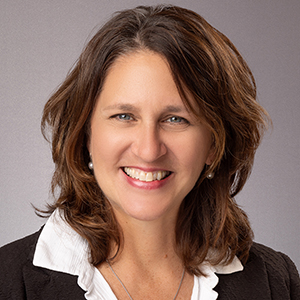
Jennifer Bridenbaugh
Assistant Professor

Rebecca Brody, Ph.D.
Professor
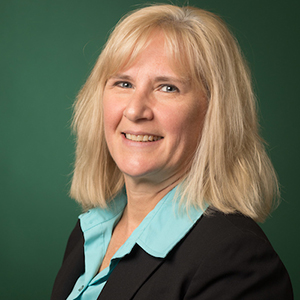
Laura Byham-Gray, Ph.D.
Professor

Patrice Paolella
Lecturer
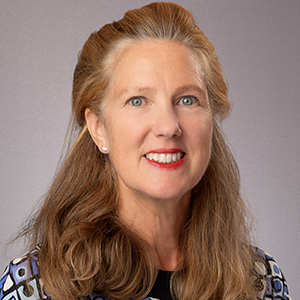
Diane Rigassio Radler, Ph.D.
Professor
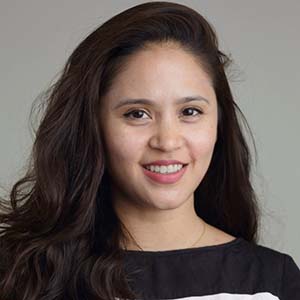
Shristi Rawal, Ph.D.
Assistant Professor
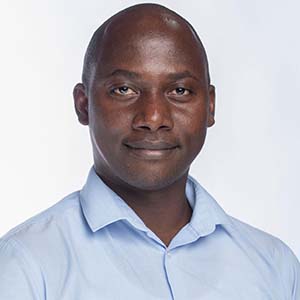
Joachim Sackey, Ph.D.
Assistant Professor
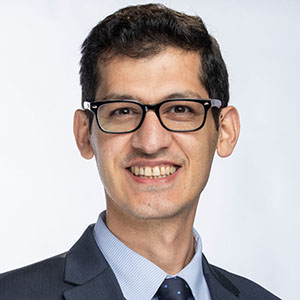
Hamed Samavat, Ph.D.
Assistant Professor
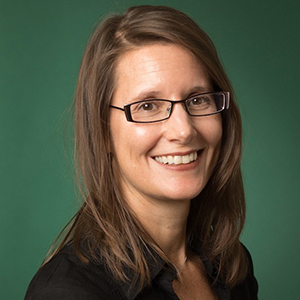
Jennifer Tomesko, DCN
Associate Professor
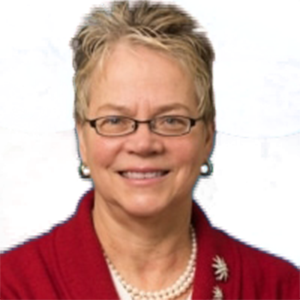
Rena Zelig, DCN
Associate Professor

Jane Ziegler, DCN
Associate Professor
Interim Chair