

From Scientific Discoveries to Clinical Impact
How Rutgers SHP Is Re-defining Behavioral Interventions
Significant advances in modern health care have led to discoveries that improve lives, yet the gap between innovation and real‑world implementation often prevents those benefits from reaching the people who need them most.
- People with serious mental health problems can thrive in school and work with the right support; however, young adults still drop out of college or quit their jobs under the weight of untreated symptoms and invisible barriers.
- Medications save lives and help manage symptoms in people with opioid use disorder; however, many still relapse under stress.
- Improvements in high‑risk pregnancy management support healthy deliveries; however, patients still get lost between clinic visits.
- Effective skin‑cancer prevention strategies exist; however the disease still appears late in communities left out of those conversations.
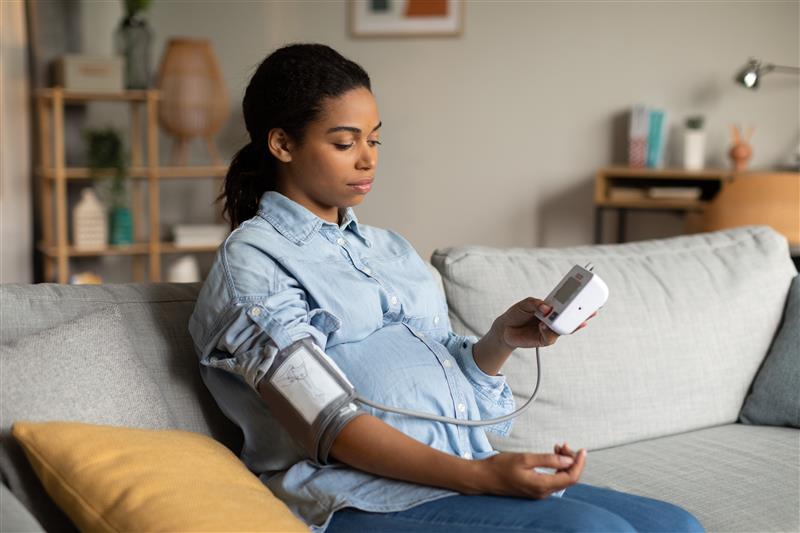 At Rutgers School of Health Professions (SHP), several research teams are zeroing in on that gap. Their common project: build behavioral interventions that turn abstract advice into actions people can actually take—and then test those interventions with the same rigor as a new drug or device.
The real bottleneck: behavior in context
A pattern runs through these projects:
- The clinical or policy “answer” is already on paper.
- The people most affected face extra barriers—stigma, stress, limited time, unstable access to care.
- Traditional approaches assume information alone will change behavior.
SHP researchers are working from a different premise: if you want different outcomes, you have to redesign what’s happening at the moment of decision—how someone asks for help, responds to a craving, checks a number, or chooses to act on a risk.
They’re also working with a clear equity lens. As Associate Professor in the Department of Psychiatric Rehabilitation and Counseling Professions Weili Lu, Ph.D., put it, “much of my work is built based on justice and equity.” That means centering people with lived experience, not as an afterthought but as co-designers.
Four examples show how this looks in practice.
Giving young people with mental health conditions more than rights
On paper, young adults with serious mental health conditions are protected. The Americans with Disabilities Act, the Mental Health Parity and Addiction Equity Act, and newer workforce laws enshrine their right to equal opportunity.
 In practice, those protections haven’t closed the gap. Only about 40% of adults with significant psychiatric disabilities are employed full time, and many students with serious mental health conditions struggle to graduate or stay enrolled.1
Lu’s work starts where legislation stops: with the small, learnable behaviors that make school and work navigable.
Her National Institute on Disability, Independent Living, and Rehabilitation Research (NIDILRR)-funded iCareer trial delivers soft skills training to transition-age youth (ages 16-24) with mental health conditions. These aren’t technical skills; they’re the human ones that quietly determine whether someone can keep a job:
- making small talk at work
- presenting yourself in an interview
- asking for help or accommodations
- responding to supervisor feedback
- navigating differences with coworkers
The intervention runs over Zoom in six modules, four sessions each. Graduate interns co-facilitate groups, gaining experience as they go. Advisory boards made up of peers, families, advocates, and professionals guide content and format to make sure it feels relevant.
That structure reflects NIDILRR’s mantra—“nothing about us, without us”—which Lu’s team has upheld from the start.
The early data suggest the approach is working. After the program, participants show large improvements in soft skills and work-related confidence, along with fewer depressive symptoms. “We have improved their soft skills,” Lu reported, “and effect size is quite large—point seven—and we even improved their mental health symptoms in terms of depression.”
A companion project applies the same logic to higher education. Many college students with serious mental health conditions know what they want academically but are derailed by procrastination, anxiety about contacting professors, or difficulty organizing coursework. Lu’s telehealth intervention combines cognitive-behavioral therapy techniques with “supported education” in twelve one-to-one Zoom sessions. In a small pilot, it significantly reduced perceived educational barriers and depression—enough to help secure new NIDILRR funding for a full randomized trial.
Across both projects, the pattern is clear: rights and accommodations matter, but they’re not enough on their own. SHP researchers are giving young people specific, practiced ways to navigate systems that weren’t built with their needs in mind—backed by data that show those skills can be taught and measured.
Teaching the brain to ride out craving
Where Lu’s work focuses on months and years, Associate Professor Suchismita Ray, Ph.D., is focused on moments—the ones where stress and craving collide.
The opioid crisis has made those moments tragically familiar. Between March 2022 and March 2023, more than 100,000 people in the United States died from overdose; over 80,000 of those deaths involved opioids.2 Medications for opioid use disorder are essential, but they don’t erase trauma, negative mood, or the reflexive pull toward substances.
Ray’s work includes Mindfulness-Oriented Recovery Enhancement (MORE), a structured form of mindfulness intervention. As she describes it, mindfulness “teaches you the technique to bring your mind to the present moment, you know, concentrate on your sensation, accept whatever feelings you are having.”
In one SHP Dean’s Grant project, she brought MORE to a group of women with opioid use disorder in an inpatient treatment facility in Newark. These women weren’t being treated for chronic pain; they were in recovery from addiction itself.
Twelve participants completed eight weeks of MORE training. Before and after those eight weeks, they underwent fMRI scans while engaging in a 10-minute guided mindfulness practice. During each scan, they also rated their mood and craving.
Even without prior training, a single 10-minute mindfulness practice made a measurable difference in how they felt. “We see that mood is increasing significantly right after 10 minutes of mindfulness practice,” Ray noted—both before they started the eight-week program and after they completed it. In other words, guided practice could lift mood in the moment, even early in treatment.
Craving scores didn’t change much in this small sample, but context mattered: by the time Ray enrolled them, many women had already completed six or seven weeks of inpatient treatment. Their craving scores were already very low, leaving little room for further decrease.
The brain data revealed more. After eight weeks of MORE, functional connectivity strengthened between:
- the amygdala (a key emotional center) and ventromedial prefrontal cortex (involved in regulation), and
- the nucleus accumbens (a reward area activated by drug cues) and a prefrontal control region (executive functions).
Ray’s interpretation: these changes suggest that after training, women “will be better able to regulate stress or negative emotion” and “better able to regulate opioid cue-provoked craving.”
One of her slides summed it up: “A 10-minute guided MORE intervention without any prior training can show immediate clinical impact.”
Those findings are now feeding into a larger National Institute of Health (NIH) clinical trial that pairs MORE with guanfacine, a medication targeting stress-response circuits. Behavioral and pharmacological interventions are being brought together deliberately: guanfacine to blunt stress-provoked craving; mindfulness to blunt cue-provoked craving; brain imaging to see how both reshape the circuits that make relapse more likely.
In this work, behavior change isn’t just “trying harder.” It’s training the brain’s own regulation systems, in ways that can be visualized, tested, and combined with other treatments.
Changing behavior where people already are: in their phones
Not every behavior change belongs in a clinic. For many people, the most powerful support can be available right on their phone—when it’s designed thoughtfully.
Two SHP researchers, Shristi Rawal, Ph.D., and Zhaomeng Niu, Ph.D., are building digital interventions that do exactly that, in perinatal care and cancer prevention, respectively.
A mobile tool for high-risk pregnancy
Rawal’s work began in Nepal, where prenatal clinics are stretched thin and time for counseling is scarce. She received an NIH Exploratory/Developmental Research Grant (R21) to develop a mobile app for women with gestational diabetes mellitus (GDM), a common pregnancy complication that, if poorly managed, increases risks for both mother and baby.
“In Nepal, prenatal clinics are so resource limited that there’s often no time for proper education,” she explained. “So with the app, our primary goal was to provide education and resources for GDM management.”
Her team didn’t just port a textbook into an app. Instead, her team took an iterative, co-design approach with the target users of the app. They reviewed the evidence, built a paper prototype, and gathered feedback from women with GDM, their families, and clinicians to understand what would actually work. The design was refined and retested over multiple rounds based on that feedback.
The final app, GDM-DH, is grounded in social cognitive theory, which emphasizes building skills, confidence, and awareness through feedback and self-monitoring. The app helps women log blood glucose, diet, physical activity, blood pressure, and weight. To make diet tracking easy and practical, the team added photos of typical portion sizes of common Nepali foods—shown in familiar bowls and utensils—so users can tap to report what they ate and select the closest match to how much they ate for each of their meals .
The app generates graphs so women can see trends at a glance: Are fasting sugars moving toward target? Are post-meal readings regularly high? Providers see the same data through a web portal, giving them more interpretable visuals alongside the paper logs.
A pilot randomized trial in Nepal compared app-plus-standard-care versus standard care alone. A supplemental funding from NIH allowed them to layer in telemonitoring: all participants received home blood pressure cuffs and glucometers, and a study nurse called biweekly to review readings and triage concerns.
The pilot showed telemonitoring to be feasible and “highly acceptable.” Women in the intervention group were more consistent in checking glucose and blood pressure at home, and their fasting and post-meal glucose levels were lower than those of controls. The work helped secure an NIH Research Project Grant (R01) to expand the work into Mobile-based Obstetric Monitoring for Pregnancies Complicated by Hypertension and/or Diabetes (MOM-HD, NCT07243886), a larger trial currently enrolling women with hypertensive disorders of pregnancy, across three hospitals in Nepal. That trial doesn’t just ask “does it work?” but also “can it be adopted, scaled, and sustained?” using the Reach, Effectiveness, Adoption, Implementation, Maintenance (RE-AIM) evidence-based framework and formal cost analyses.
Rawal is candid about the challenges involved. “With mHealth,” she noted, “adherence is always an issue, and the engagement is an issue.” Her newer projects are testing gamification features, small in-app incentives, and integration with platforms like Apple Health and Google Fit, so data can flow in passively from whatever wearable device a person already owns and uses.
Closer to home, Rawal has piloted prototypes of digital tools with pregnant and postpartum women in Newark who’ve experienced hypertensive disorders of pregnancy. Even in large academic centers, many are still logging numbers on paper and trying to remember them between visits. Early feedback from both patients and maternal-fetal medicine specialists has been consistent: they describe the tools as “really easy to use and highly acceptable,” highlighting how much room there is to modernize prenatal care, even in well-resourced settings.
Giving a popular chat app a new role in prevention
Meanwhile, Niu is using a different digital channel—WhatsApp—to address skin cancer risk among Hispanic adults.
Skin cancer is the most common cancer in the U.S. One in five Americans will develop it by age 70.3 Historically, research and prevention campaigns have focused on non-Hispanic white populations. But over the past two decades, melanoma incidence among Hispanics has risen by about 20%. When diagnosed, it’s often at a younger age and at a more advanced stage with a correspondingly lower five-year survival rate.
Niu’s qualitative work revealed a consistent misperception: “a lot of them feel that if they have darker skin tone, they will not get skin cancer at all.” Many are less familiar with warning signs and less likely to engage in sun protection, even as they work outdoors in high UV settings.
Her intervention starts from what people already use. “I’m interested in building, designing effective digital interventions for health behavior change in general, and especially among underserved and understudied populations,” she told the audience—and for this population, that meant WhatsApp, a platform widely used to keep in touch with families across borders.
Participants in her single-arm pilot received three months of WhatsApp messages, in English or Spanish, on:
- how skin cancer shows up in Hispanic skin
- practical sun safety strategies
- how to do a full-body skin self-exam and what to look for (the ABCDEs of melanoma)
- when to seek a professional exam
- how personal skin protection supports family and community well-being
The content isn’t just text. Niu’s team uses images, short videos, emojis, polls, quizzes, and goal-setting prompts (“set a goal for sun protection this week,” “share this with one family member”). They respond quickly to questions and tailor posts to real-world events—extreme UV alerts, holidays, community happenings. One module explicitly tackles social media misinformation about skin cancer.
In the pilot, 44 people enrolled and 40 completed the three-month follow-up, a strong retention signal. Satisfaction scores were high. Sun protection behaviors improved, and the proportion of participants who had done a full-body skin self-exam in the past three months rose from 10% to 37.5%.
As Niu summarized it, “this mobile-based intervention was feasible and acceptable among at-risk Hispanic adults.” Next comes a randomized trial to test its impact more fully—but already, it shows how a familiar chat app can double as a behavior-change tool when content is tuned to people’s realities and values.
A shared blueprint for behavioral interventions
Put side by side, these projects might look unrelated at first glance: employment supports for youth with psychiatric disabilities, mindfulness training for women with opioid use disorder, mobile tools for high-risk pregnancies, WhatsApp messages about sunscreen and skin checks.
Look again, and a shared strategy emerges.
Across Rutgers SHP, researchers are:
- Starting from real lives, not idealized ones—busy clinics in Nepal, inpatient units in Newark, community workers out in the sun, students trying to finish degrees while managing symptoms.
- Designing with, not for, communities—through advisory boards, user testing, and co-facilitation that reflect NIDILRR’s “nothing about us, without us” in practice.
- Embedding behavior change inside existing routines and tools—Zoom sessions instead of extra clinic visits, guided meditations that can be replayed, apps and sensors people already carry, WhatsApp threads people already check.
- Measuring what matters, from soft skills and mood to functional connectivity, glucose curves, and sun protection behavior—using randomized trials, implementation frameworks, neuroimaging, and machine learning where they’re useful.
Underneath the technology and statistics is a simple, demanding aim: make it more possible for people to do the thing that keeps them safer, healthier, and more included—at the exact moment when that choice is hardest.
That is what “advancing research and scholarship through behavioral interventions” looks like at Rutgers SHP. Not just telling people what should happen, but redesigning the supports, scripts, and tools that help it happen—one conversation, one meditation, one app prompt, one WhatsApp message at a time.
References
- Sarah Parker Harris, Rob Gould, and Department of Disability and Human Development, University of Illinois at Chicago, “Mental Health, Employment, and the ADA,” 2019, https://adata.org/sites/adata.org/files/files/ADA%20Research%20Brief_Mental%20Health%20and%20the%20ADA_FINAL.pdf.
- “Understanding the Opioid Overdose Epidemic,” Overdose Prevention, June 9, 2025, https://www.cdc.gov/overdose-prevention/about/understanding-the-opioid-overdose-epidemic.html#:~:text=Approximately%20105%2C000%20people%20died%20from,The%20number%20of.
- “Skin Cancer,” n.d., https://www.aad.org/media/stats-skin-cancer#:~:text=Incidence%20rates,12).