
Rehabilitation and Movement Sciences
Continuing Education Courses
Rutgers University is committed to providing high-quality evidence-based continuing education programs for healthcare professionals. All programs are offered on a non-discriminatory basis.
Courses
Grass on the Field:
Navigating Cannabis with Your Athletic Patients
Presented By:
Lori S. Zucker, PT, DPT, MA
Ellen Zambo Anderson, PT, PhD
Sunday, October 11, 2026
8:30 am – 3:30 pm
Live, In-Person, and Interactive
This 6-hour program is designed to provide the attendee with knowledge, insight, and manual skills to treat Congenital Muscular Torticollis. The course will explore the etiology of different types of Torticollis, various treatment techniques for each, and when to make appropriate referrals to other healthcare providers such as a neurosurgeon, pediatrician and/or orthopedist.
Historically, many physical therapists express frustration with their inability to gain trust and compliance from these children and their families, and report that treatment periods often exceed six months. Nancy Neiditz’s approach to treatment of torticollis results in episodes of care which rarely exceed 1 month with full resolution of the condition. She designs her treatment approach her based on type of Torticollis and motor age of the baby. Her techniques, which incorporate manual therapy and reinforcement of appropriate motor milestones for active movement, have been shown to painlessly and effortlessly change the cervical patterns which contribute to Torticollis. Therapists will learn how to use rolling, coming to sit, sitting and crawling to correct the cervical dysfunction.
The course will incorporate videos of treatment of newborns, infants and toddlers. The instruction is clear and specific, depending on the side of the Torticollis and the age of the child. There will be break-out groups designed to allow for practice of the new activities presented in the course.
Following this presentation, participants will be able to:
- Explain the etiology of congenital muscular Torticollis
- Explain the difference between the rotational and side bending components of torticollis.
- Differentiate Congenital Muscular Torticollis from underlying Ocular, Neuromuscular, and Osseous Torticollis.
- Explain how the cervical spine and muscles cause distorting posture.
- Differentiate between Plagiocephally, Brachycephally and Craniocynostosis.
- Analyze how Plagiocephally plays a role in Torticollis.
- DIscuss gross motor milestones ages 0-12 months.
- Perform neuromuscular approaches that incorporate principles created by Moshe Feldenkrais based on human neurology and physics.
- Perform at least 5 new exercises for each age group, 0-5 months, 6-9 months, and babies over 10 months of age.
Target Audience: This intermediate level course is designed to advance therapists’ knowledge and treatment skills regarding Congenital Muscular Torticollis. It is geared towards physical therapists, but contains valuable information for other healthcare providers as well, and all are welcome to attend.
Morning
| 8:00 – 8:30 | Registration & Continental Breakfast (provided) |
| 8:30 – 9:00 | Course introduction, Introduction of presenter and participants |
| 9:00 – 9:30 | Movement lessons based on infantile motor patterns |
| 9:30 – 10:30 | Etiology, pathology, and anatomy of multiple types of infantile torticollis, plagiocephaly, brachycephaly, and craniocynostosis. |
| 10:30 – 10:45 | Break |
| 10:45 – 12:15 | Developmental motor milestones and primitive reflexes across ages as they relate to treatment of torticollis |
Afternoon
| 12:15 – 1:00 | Lunch (Bring your own, please!) |
| 1:00 – 2:00 | Approaches and handling of children using FeldenkraisTM and Anat Baniel NeuromovementTM methods. |
| 2:00 – 2:15 | Break (snacks provided) |
| 2:15 – 3:15 | Exercise program development and practice |
| 3:15 – 3:30 | Wrap up; Q & A |
Course Location
This course is taking place as a live, in-person, and interactive program. The location is at Rutgers University Doctoral Program in Physical Therapy, Stanley Bergen Building, 65 Bergen Street, Newark, NJ 07101. Parking
will be available on-site at no cost (additional information will be sent to registrants.)
Registration is Required
Registration includes coffee, tea, and snacks during the course. Please bring your own lunch
How To Register:
Registration can only be accepted through our secure online website. Payment may be made with MasterCard, Discover, or Visa credit cards. American Express is not accepted. Payment can also be made using an electronic check.
To register, visit: https://apps.shp.rutgers.edu/projects/onlinepayment/PT/PT_form.cfm
Once registered and your tuition has cleared, you will receive a receipt of payment, and a confirmation letter.
Handouts, and additional information to assist you with your plans to attend this course will be sent shortly before the day of the event. Please save the receipt and the rest of the information.
Cancellation / Refund
A full refund, less a $15.00 cancellation fee, will be granted if notice is received at least 48 hours in advance of the program.
Refunds cannot be given for “no shows” or cancellations received after that time. Cancellations should be made directly through
Nancy Mingelgreen at mingelna@shp.rutgers.edu. Please attach your receipt to your cancellation email.
Continuing Education Credits
This program has been approved for 5.75 CEs by the New Jersey State Board of Physical Therapy Examiners, Board Course Number 2606-23.
Rutgers University’s Doctoral Program in Physical Therapy is recognized by the NY State Education Department’s State Board of Physical Therapy, and by the Pennsylvania State Board of Physical Therapy, as an Approved Provider of Physical Therapy and Physical Therapist Assistant Continuing Education.
For additional Information, please email Nancy Mingelgreen: mingelna@shp.rutgers.edu.
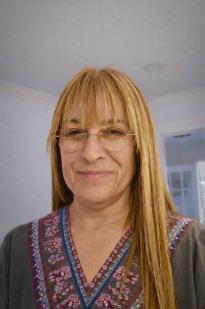 Nancy Neiditz, PT has been a physical therapist since 1989. In addition to being a physical therapist, Nancy graduated as a certified Feldenkrais® practitioner in 1994. She began studying with Anat Baniel in 1997 and became a certified Anat Baniel Method™ for Children practitioner in 2006. Nancy draws on her backgrounds in dance, yoga, Feldenkrais®, Anat Baniel Method™ for Children, and Pilates when designing and carrying out her treatment plans.
In May of 2023 the International Summit for health & Safety, held in Copenhagen asked Nancy to present an electronic poster with her innovative home care called, “Torticollis, Fix it at Home.” This was information given internationally designed to help developing nations, deliver health care more
affordably. She has given workshops at Feldenkrais® Regional & National Conference. Nancy created the course for Motivations in 2012, “A Fresh Approach to Torticollis,” a one-day workshop that P.T.’s and O.T.’s use to renew their professional licenses throughout the United States, England, Italy and Turkey. She taught this over 30 times.
Nancy holds a degree in physical therapy B.S. from New York University, 1989 and a B.A. from Connecticut College in Italian Studies and Dance, 1980. She speaks Spanish and Italian fluently and has a new working knowledge for children in Yiddish, French and Turkish. She has also been a lecturer since 2003.
One of Nancy’s gifts is her ability to properly diagnose the child and create treatment plans which may require treatment from other professionals. Her keen eye and 36 years as a physical therapist in a hospital, out-patient clinic, private practice and Early Intervention contribute to years and scores of children that she has treated. She has successfully worked with thousands of babies. At times she evaluates a child and does not suggest treatment due to the quality and trajectory of the child’s motor development. Sometimes she sends them to an ophthalmologist, orthopedist, neurologist, geneticist, or back to their pediatrician. She not only measures the current level of the child or baby but, looks to see if there might be an underlying problem.
Her candor and intelligence leads her families in the proper direction to mitigate the delays or difficulties. Many pediatricians refer exclusively to Nancy because of her calm, gentle approach to working with all types of motor disorders.
The New Code of Ethics as a Catalyst for
Professional Maturation in Physical Therapy
 Presented By:
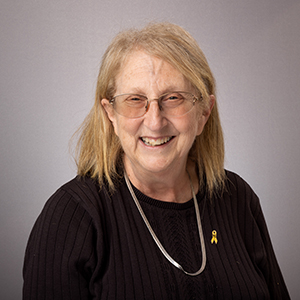
Nancy R. Kirsch, PT, DPT, PhD, FAPTA
Weeknights: 5:00 pm – 7:45 pm
Tuesday October 6, 2026
Thursday November 19, 2026
Sundays: 8:00 am – 10:45 am
Sunday December 13, 2026
Live Webinars Presented on Zoom
This course introduces physical therapists and physical therapist assistants to the 2026 Code of Ethics for Physical Therapy and its application in today’s complex healthcare environment. Participants will explore how ethical principles guide clinical decision-making while navigating competing demands such as productivity pressures, regulatory requirements, evolving reimbursement models, the use of AI in clinical and educational settings, interprofessional dynamics, and patient-centered care challenges
Emphasis is placed on building a strong moral community within practice settings—one that supports integrity, accountability, and collaborative problem-solving. Through case-based discussion and practical strategies, learners will be empowered to uphold ethical standards, advocate for patients, and foster a culture of ethical resilience in the face of ongoing healthcare system challenges.
During and at the conclusion of this program, participants will be able to:
- Analyze clinical scenarios to identify ethical conflicts arising from productivity pressures, regulatory requirements, reimbursement
models, emerging technology, including AI integration, and interprofessional dynamics, using the 2026 Code of Ethics for Physical
Therapy as a guiding framework. - Evaluate clinical decision-making processes and professional actions in diverse healthcare contexts to determine their alignment with ethical principles, patient-centered care standards, and legal/regulatory expectations.
- Apply the 2026 APTA Code of Ethics to real-world case studies to justify ethical courses of action, balancing competing demands while advocating effectively for patients and maintaining professional accountability.
- Design strategies to promote and sustain an ethical practice environment, including fostering moral community, supporting
collaborative problem-solving, and building ethical resilience within healthcare teams.
Weeknight Sessions
| 5:00 – 5:30 pm | Introductory Remarks The Evolution and Structure of the new Code of Ethics: Enforceable vs. Aspirational |
| 5:30 – 6:30 pm | Application of the new Code of Ethics to current practice challenges: Use of emerging technology, including AI, Ambient Scribes, Remote Therapeutic Monitoring (RTM), Productivity Demands. Meeting demands preserving the integrity of care. |
| 6:30 – 6:45 pm | Break |
| 6:45 – 7:15 pm | The challenge to evolve PT to a moral community |
| 7:15 – 7:45 pm | Clinician wellness and professional growth |
Sunday Morning Sessions
| 8:00 – 8:30 am | Introductory Remarks The Evolution and Structure of the new Code of Ethics: Enforceable vs. Aspirational |
| 8:30 – 9:30 am | Application of the new Code of Ethics to current practice challenges: Use of emerging technology, including AI, Ambient Scribes, Remote Therapeutic Monitoring (RTM), Productivity Demands. Meeting demands preserving the integrity of care. |
| 9:30 – 9:45 am | Break |
| 9:45 – 10:15 am | The challenge to evolve PT to a moral community |
| 10:15 – 10:45 am | Clinician wellness and professional growth |
Registration is Required
Please select the session you wish to attend carefully (“think twice, click once!”) as it is difficult to make changes once registration has taken place.
Registration Fees:
- UMDNJ / Rutgers PT Alumni: $45.00
- APTA Member: $45.00
- Rutgers DPT Clinical Educators: $45.00
- All others: $65.00
How To Register:
Payment can only be accepted through our secure online website. Payment may be made with MasterCard, Discover, or Visa credit cards. American Express is not accepted. Payment can also be made using an electronic check.
To register, visit: https://apps.shp.rutgers.edu/projects/onlinepayment/PT/PT_form.cfm
At least 2 weeks before the scheduled session, you will receive an email from us which will
contain your unique link into the course session. Please keep it handy so that you know how to enter the Zoom session. (You do NOT need to register yourself on Zoom…this will be done
for you.)
Cancellation / Refund
A full refund, less a $15.00 cancellation fee, will be granted if notice is received at least 48 hours in advance of the program.
Refunds cannot be given for “no shows” or cancellations received after that time. If you register for a session, you may not switch it for another session unless you cancel and re-register through the link (this
will incur the $15.00 cancellation fee.
Cancellations should be made directly through Nancy Mingelgreen at
Nancy.Mingelgreen@Rutgers.edu. Please attach your receipt to your cancellation email.
Continuing Education Credits:
This course has been approved for 2.5 CEs by the New Jersey State Board of Physical Therapy Examiners. As it is a synchronous event (presented on Zoom) it counts towards your “live” CE credits, and satisfies your Ethics
course requirement for this licensing period! Board Course Number 2604-28.
Rutgers University’s Doctoral Program in Physical Therapy is recognized by the NY State Education Department’s State Board of Physical Therapy, and by the Pennsylvania State Board of Physical Therapy, as an Approved Provider of Physical Therapy and Physical Therapist Assistant Continuing Education.
For additional Information, please email Nancy Mingelgreen: mingelna@shp.rutgers.edu.
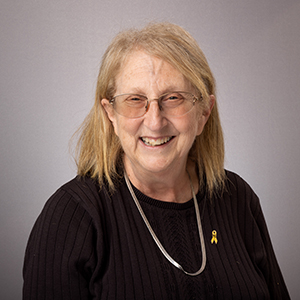 Nancy R. Kirsch, PT, DPT, PhD, FAPTA is a professor of physical therapy and Chairperson of the Department of Rehabilitation and Movement Sciences at Rutgers, The State University of New Jersey. She currently serves on the Board of Physical Therapy Examiners, Division of Consumer Affairs in New Jersey. She previously served two terms as President of the Federation of State Boards of Physical Therapy, and also previously served as President of the New Jersey Chapter of the APTA.
Dr. Kirsch owned a private practice prior to entering academia full time. She recently served on the APTA task force to revise the Code of Ethics and Standards of Ethical Conduct. She currently serves on the APTA PT Magazine Editorial Committee. Dr. Kirsch presents on topics in ethics and risk management at professional meetings on the national and international level.
Her academic and research interest is professional behavior, moral injury, ethical decision making and ethical risk factors. Dr. Kirsch wrote a column in APTA Magazine for over fifteen years called Ethics in Practice and is author of the text Ethics in Physical Therapy. Registration

Rutgers, The State University of New Jersey, an equal opportunity, affirmative action institution. All rights reserved.
Rutgers is an equal access/equal opportunity institution. Individuals with disabilities are encouraged to direct suggestions, comments, or complaints concerning any accessibility issues with Rutgers web sites to: accessibility@rutgers.edu or complete the Report Accessibility Barrier or Provide Feedback Form.