Unlock Boundless Opportunities with a Doctorate from Rutgers in Counseling and Psychiatric Rehabilitation
Our graduates become scholars, researchers, educators, supervisors and leaders in the fields of both Psychiatric Rehabilitation and Counselor Education and Supervision. We offer two tracks within the Ph.D. in Psychiatric Rehabilitation Counseling program: Psychiatric Rehabilitation Research Track and Counselor Education and Supervision Track.
Why Study Psychiatric Rehabilitation Counseling at SHP?
Graduates of SHP’s Ph.D. in Psychiatric Rehabilitation Counseling program have a wide range of career opportunities available to them. Our graduates are employed as Faculty members in colleges and universities, Academic program directors, College and university administrators, and Behavioral health specialists.
Program Highlights
Our doctoral program is part-time as most students are working in community mental health-related jobs while pursuing their degree. To accommodate the working professional, classes are offered in-person on the Piscataway campus in the evenings between 6 and 9 p.m.
Fast Facts:
-
- Our program is the only Ph.D. in Psychiatric Rehabilitation Counseling in the country.
- Students can co-teach with faculty at different educational levels within the department.
- Doctoral students are encouraged and supported to work with faculty on funded research studies
- Doctoral faculty are nationally and internationally recognized for their research and scholarship in psychiatric rehabilitation
- All doctoral classes are small and offer a high level of student-faculty interaction.

Program Overview
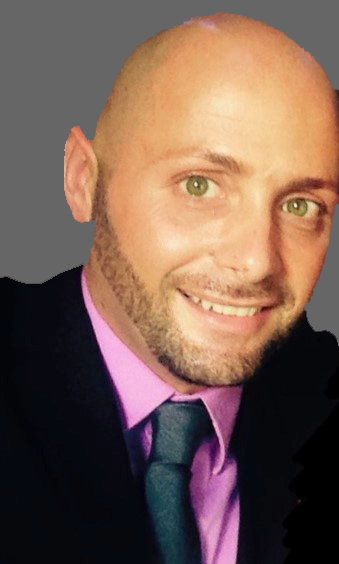
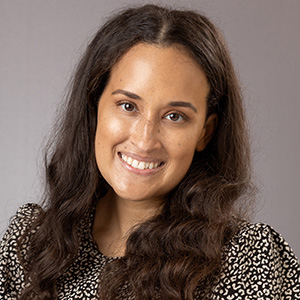
Anthony Zazzarino
We offer two tracks within the Ph.D. in Psychiatric Rehabilitation Counseling program: a Counselor Education & Supervision (CES) Track and a Psychiatric Rehabilitation Research Track. The CES track is in the process of seeking accreditation and supports the development of counselor educators with an emphasis on psychiatric rehabilitation.
The rehabilitation research track is the only doctoral program in the country that prepares students to be leaders in the field of psychiatric rehabilitation, supporting individuals with a serious mental health condition. Graduates from both tracks excel in the field as educators, advocates, researchers, supervisors, and clinicians.
The doctoral program has a total of 27 students (12 students in the CES track and 15 students in the traditional research track)
Each semester, the doctoral program offers approximately 4-6 courses, along with dissertation research support. Students in the CES track can work toward licensure as a professional counselor and obtain their approved clinical supervisor certification. In both programs, students are publishing in peer reviewed journals, presenting at state and national conferences, and seeking leadership roles within professional organizations.
The program currently has three core faculty assigned to teach required courses in the program plus additional full-time Department faculty who teach selected courses in the program. Student outcomes are evaluated each year on a variety of different metrics that are part of the overall program evaluation.
 Accreditation
The Ph.D. in Psychiatric Rehabilitation Counseling, Counselor Education & Supervision track received its initial accreditation that runs through April 30, 2034
For more information, contact Assistant Program Director, Anthony Zazzarino, PhD, LPC, ACS, CPRP at asz28@shp.rutgers.edu.
Program Outcomes
For the Counselor Education and Supervision Track only
Ph.D. Psychiatric Rehabilitation Counseling: Counselor Education Track & Traditional Research Track
Annual Report: July 1, 2024-June 30, 2025
The PhD in Psychiatric Rehabilitation Counseling offers two separate tracks: a counselor education & supervision (CES) track and a traditional research track. The CES track is in the process of seeking accreditation and supports the development of counselor educators with an emphasis on psychiatric rehabilitation.
The traditional research track is the only doctoral program in the country that prepares students to be leaders in the field of psychiatric rehabilitation, supporting individuals with a serious mental health condition. Graduates from both tracks excel in the field as educators, advocates, researchers, supervisors, and clinicians.
The doctoral program has a total of 22 students (9 students in the CES track and 13 students in the traditional research track). Each semester, the doctoral program offers approximately 4-6 courses, along with dissertation research support.
Students in the CES track can work toward licensure as a professional counselor and obtain their approved clinical supervisor certification. In both programs, students are publishing in peer reviewed journals, presenting at state and national conferences, and seeking leadership roles within professional organizations. In January of 2024, the department opened up its own mental health clinic that offers free counseling services to Rutgers students, faculty, and the community. Students in the doctoral program will have the opportunity to providing individual and group counseling, as well as supervise master’s level counselors.
The program currently has three core faculty assigned to teach required courses in the program plus additional full-time Department faculty who teach selected courses in the program. Student outcomes are evaluated each year on a variety of different metrics that are part of the overall program evaluation. Core faculty are listed below:
Anthony Zazzarino, Ph.D. Assistant Director
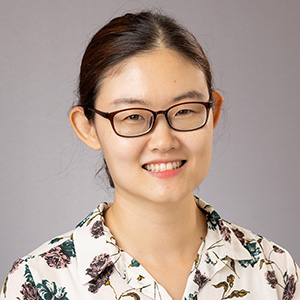
SunHee Eissenstat, Ph.D.
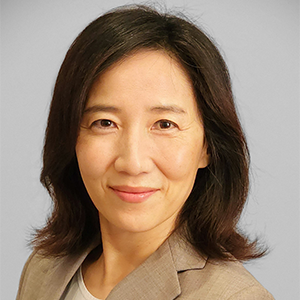
Weili Lu, Ph.D.
Information about tuition and fees is available at http://shp.rutgers.edu, select Students, then Current Students and Tuition and Fees. Information about financial aid is available from the Rutgers Health Financial Aid Office at http://shp.rutgers.edu, select Students, then Current Students and Financial Aid. SHP offers scholarships available to both incoming and continuing students.
Information about SHP scholarships is available at http://shp.rutgers.edu, select Students, then Current Students and Scholarships. You must be accepted as a matriculated student to be eligible for a SHP scholarship. Most SHP scholarships are based on financial need, and it is recommended to submit the Free Application for Federal Student Aid (FAFSA) in addition to the SHP scholarship application and your transcripts. When applying for SHP scholarships, be sure to read the application directions carefully and follow all directions. Incomplete applications are not considered. One application can be used to apply for all SHP scholarships. Please check the SHP website for the closing date for applications.
For the 2022-2023 academic year, 6 are currently in the dissertation process, with 3 more students expected to enter the dissertation process. Below is information concerning the program’s student retention rate by entering cohort over the period from 2020 through 2023.
Student Retention: Students Beginning in Years 2020 Through 2025
Graduate Employment
As of this report, all 4 graduates are currently employed. Two of the four are employed at a university and two are employed at a mental health agency.
| Academic Year | # in Beginning of Year | New Admissions | Graduates | # at End of Year | Reason for Discrepancy |
| 2020-2021 | 8 | 5 | 0 | 13 | |
| 2021-2022 | 13 | 3 | 0 | 14 | 2 students withdrew from the program |
| 2022-2023 | 14 | 1 | 0 | 14 | 1 student academically dismissed |
| 2023-2024 | 14 | 0 | 2 | 11 | 1 student transferred to online studies |
| 2024-2025 | 11 | 3 | 2 | 9 | 1 student withdrew due to medical reasons
2 students administratively withdrawn |
| 2025-2026 | 9 | 4 |
Accreditation
The program is currently seeking accreditation from the Council for Accreditation of Counseling and Related Educational Programs (CACREP) for the CES track. The self student was formally submitted in January of 2024. Due to a delay from CACREP, the virtual site visited will be scheduled for some time in 2025. Once accredited, we will be the third CES program in the state and the only program that focuses on individuals with a serious mental health condition.
For more information, contact Assistant Program Director, Anthony Zazzarino, PhD, LPC, ACS, CPRP at asz28@shp.rutgers.edu.
Admission Criteria
Students are admitted to the Ph.D. in Psychiatric Rehabilitation only in the Fall semester.
Application to the Ph.D. in Psychiatric Rehabilitation Counseling, Counselor Education and Supervision Track or for the Research Track program must be submitted through the AHCAS application portal. Deadline to apply is April 1.
Admission Requirements
SHP Tuition and Fees
For Tuition and Fees, please see the Graduate Tuition and Fees.
(Scroll down to 2026-2027 Rutgers Health Tuition and Fee Rates and click on School of Health Professions)
For Financial Aid information, please visit https://scarlethub.rutgers.edu/financial-services/
Curriculum
We recommend that students take two classes in the Fall and Spring semesters and one class in the Summer semester.
All doctoral students are required to pass a candidacy exam after completing the majority of their coursework but before beginning their Dissertation Sequence.
Guided by an experienced dissertation committee, students will be provided the supervision, support, and encouragement to produce state-of-the-art dissertation research with high utility for professional application. The supervision of doctoral students and dissertation research are expressly recognized as important faculty roles.
Current Students
Disability Services
As a Rutgers School of Health Professions student, you are part of the Rutgers Health division. To request accommodations or learn more about RBHS Disability Services please visit the Rutgers Health Disability Services website.
Dissertation Procedures
Please see Policy 7.1 “PhD Student Standards” below which includes information on:
- Dissertation Committees / Readers
- Dissertation Proposal and Format
- Dissertation Proposal Hearing/Data Collection
- Dissertation Defense
- Post Dissertation Requirements and more
Dissertation Policy can be found here.
Professional Liability Insurance
Students must be covered by professional liability insurance while participating in practicum or internship experiences. Under the Memoranda of Understanding (MOU), the University provides professional and general liability coverage for the student performing activities under the terms of the MOU agreement. This coverage provides for limits of coverage of not less than $1,000,000 per occurrence and $3,000,000 in the aggregate, provided through a Program of Self-Insurance.
Students may wish to make arrangements to obtain their own professional liability insurance. This is a recommended practice followed by many counseling professionals even when insurance is provided by the agency. Such insurance is available at low cost through one of the professional associations. American Counseling Association (ACA) student membership includes liability insurance for ACA student members enrolled and engaged in a master’s degree counseling curriculum at a post-secondary institution. This coverage is solely while performing counseling services such as the practicum and internship related to such curriculum. Additional information is available at www.counseling.org select Membership and then Membership Benefits.