Interprofessional collaboration is at the heart of every SHP program—and now, it’s
being taught in a new way.
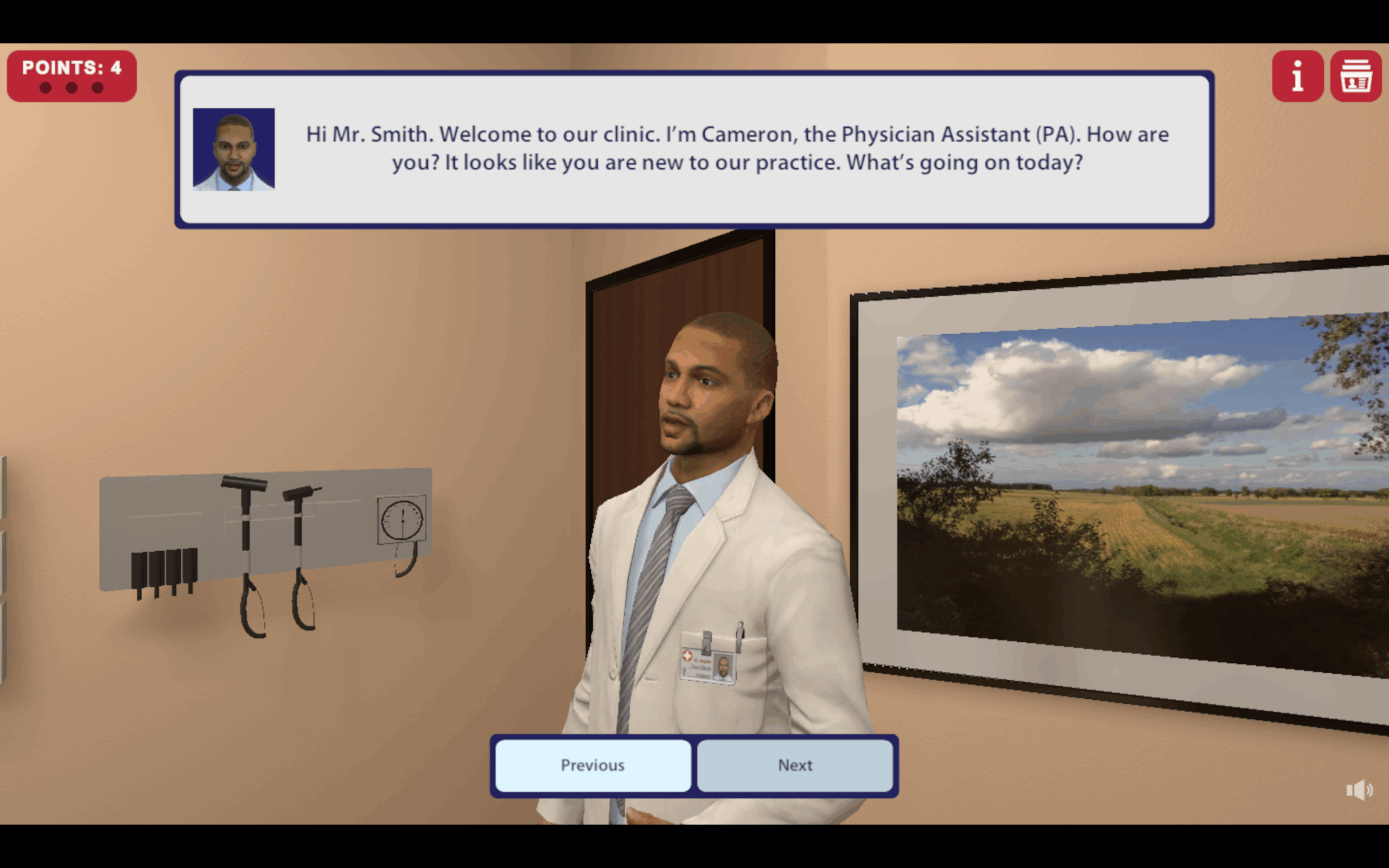
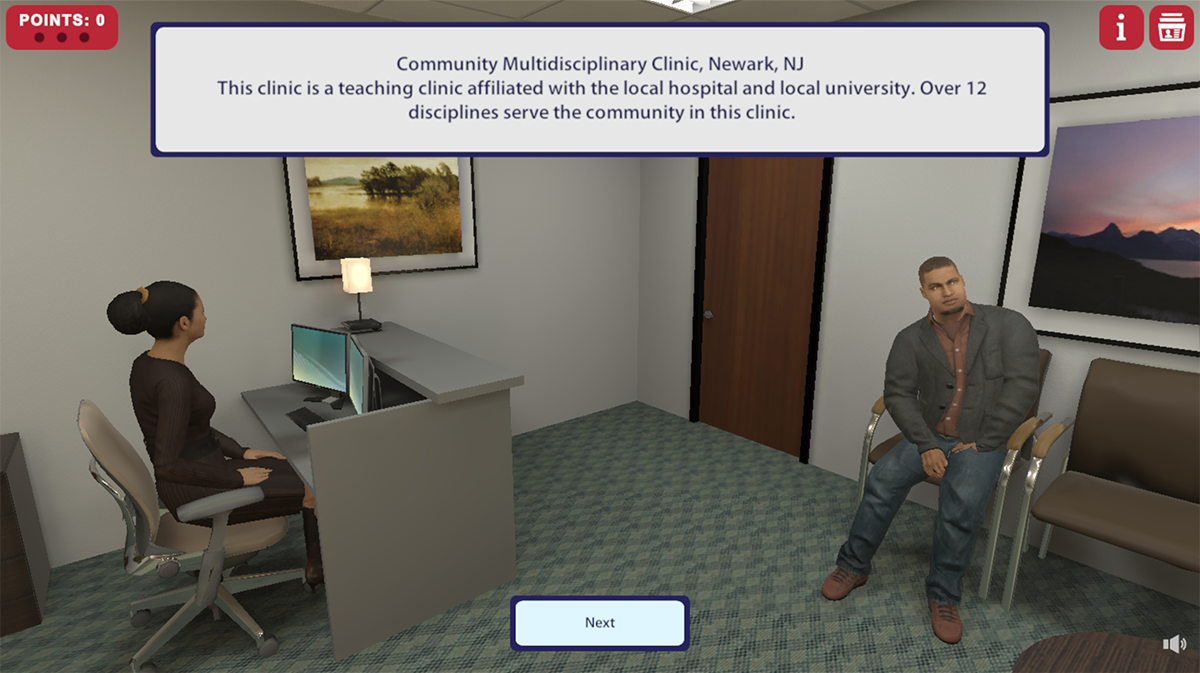
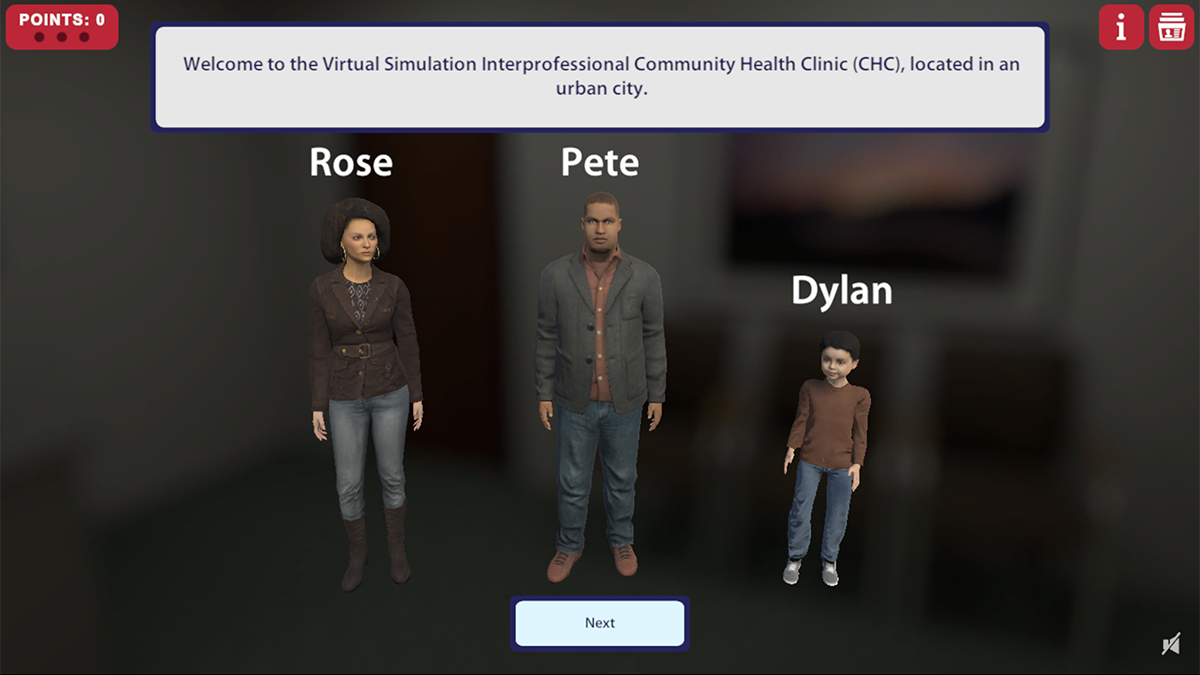
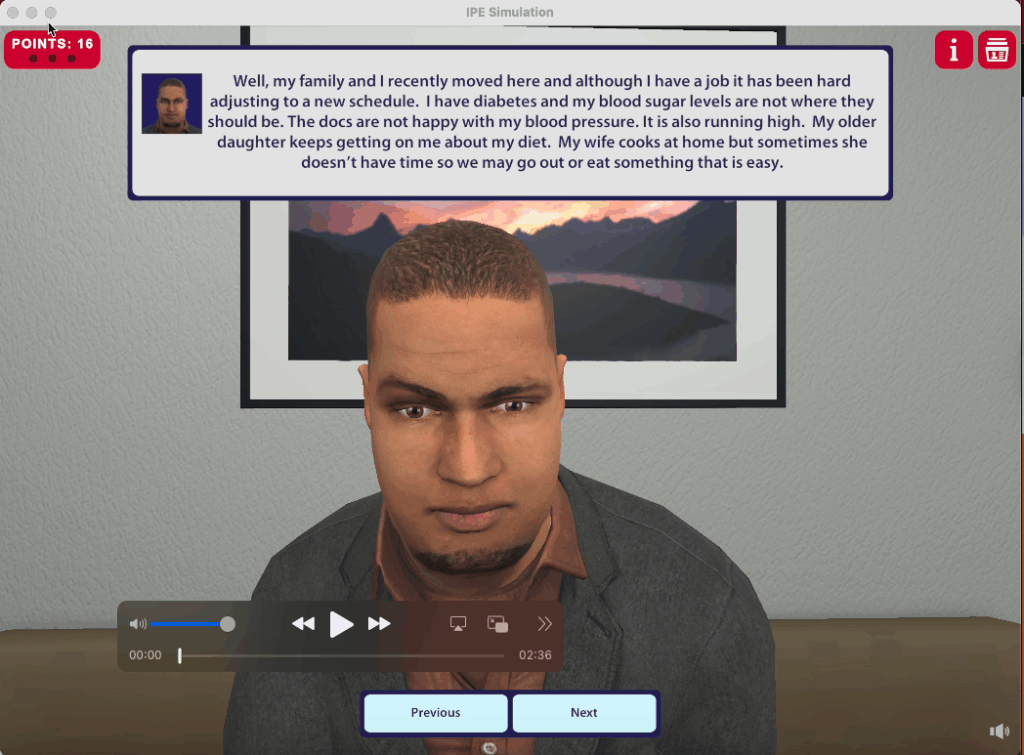
In a course that debuted last year, students from a variety of disciplines meet “Pete” and his family—patients with a mix of physical, emotional, and developmental concerns. Working together, the future health care professionals decide which practitioners are best suited to help, such as a speech therapist for Pete’s child and a mental health counselor for his wife.
The twist? Pete and the health professionals are animated avatars in a simulation game designed to mirror the complexities of modern health care.
“It’s a great introduction to interprofessional practice using gaming,” said physical therapy student Mesh Ramirez. “You look at the symptoms and your own scope of practice and recognize what is outside of your scope and who you could refer the patient to. So really, it is breaking down silos.”
The game-based course is now required for students in every SHP degree program. It teaches interprofessional education—the ability to understand and work across disciplines to deliver effective, patient-centered care.
“The complexities of health care today require team-based solutions,” said Alma Merians, professor of physical therapy and associate dean, who led the effort. “This method of delivery is an innovative way to train students to work in health care teams.”
The two-part course combines traditional online modules with interactive, casebased simulations. In small groups meeting on Zoom, students collaborate to solve problems, compare answers, and receive real-time feedback from avatars who guide or correct them. Each case reflects diverse backgrounds and real-world challenges while reinforcing national standards set by the Interprofessional Education Collaborative (IPEC).
“We wanted to make the learning engaging,” said Merians. “The gaming environment encourages interaction and reflection—helping students understand not only their own roles, but how every discipline contributes to better outcomes.”