REIMAGINING EDUCATION
Shaping the future of care
We are driven by one goal: preparing our students to deliver informed, compassionate, and current care. That commitment begins at admission. Our students arrive with diverse backgrounds and lived experiences that spark their desire to make a difference.
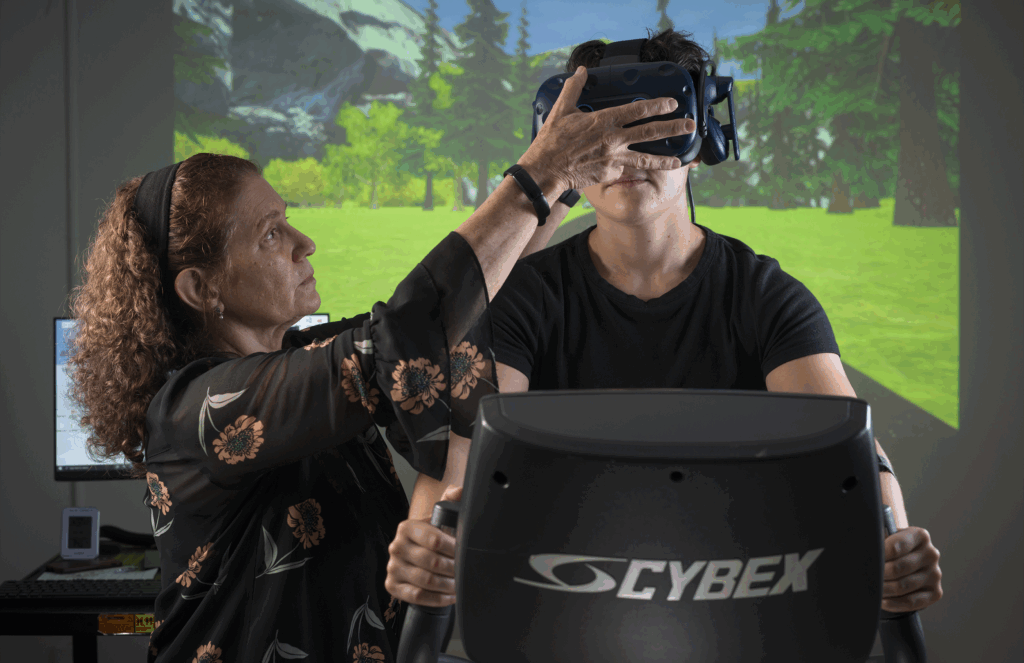
We build on that passion through nearly 30 academic programs, interprofessional learning, and hands-on experience in community clinics, where students learn to deliver patient-centered care. Innovative approaches—including simulation, gaming, and artificial intelligence—prepare them not just to adapt to change, but to advance the future of health care.
IMPACT
Students Enrolled
1,320
Underrepresented Students
59%
Faculty in National Leadership Roles
31
USING GAMING TO MASTER TEAM-BASED CARE
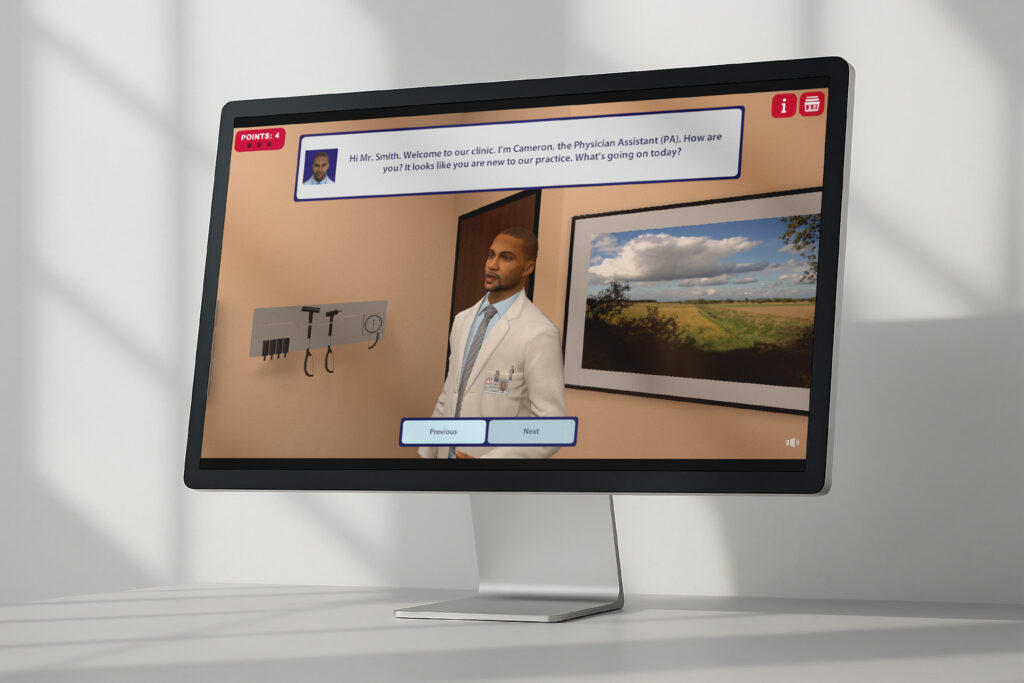
Interprofessional collaboration is at the heart of every Rutgers School of Health Professions (SHP) program—and now, it’s being taught in a new way.
In a course that debuted last year, students from a variety of disciplines meet “Pete” and his family—patients with a mix of physical, emotional, and developmental concerns. Working together, the future health care professionals decide which practitioners are best suited to help, such as a speech therapist for Pete’s child and a mental health counselor for his wife.
The twist? Pete and the health professionals are animated avatars in a simulation game designed to mirror the complexities of modern health care..
RUTGERS PHYSICIAN ASSISTANT PROGRAM TURNS 50
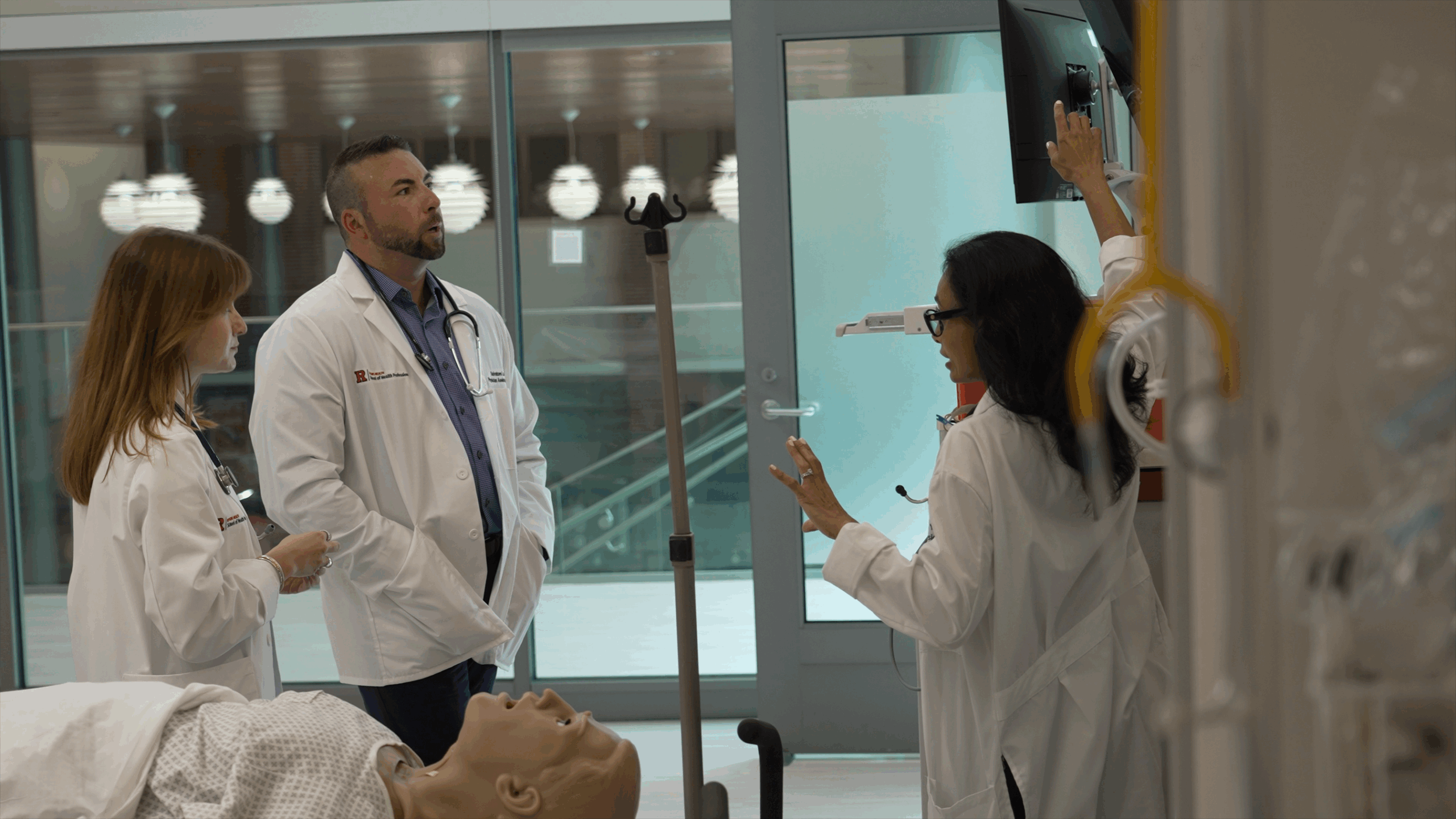
Fifty years ago, Rutgers School of Health Professions (SHP) launched New Jersey’s first Physician Assistant (PA) program,
starting with just a dozen students who couldn’t even practice in-state due to outdated laws. Today, our program is a nationally ranked powerhouse, producing top-tier PAs who shape health care in New Jersey and beyond.
Ranked among the nation’s Top Ten by U.S. News & World Report, our PA program admits just 3 percent of applicants. But the journey wasn’t easy. While other states licensed PAs as early as the 1970s to address physician shortages, New Jersey held out until 1992— after a march on the statehouse attended by faculty and graduates who fought to push legislation through.
AI-POWERED TEACHING AND SCHOLARSHIP
When Antonina Mitrofanova, associate dean of research and associate professor of biomedical informatics, first began shaping initiatives in her role as co-director of Rutgers’ Center for Biomedical Informatics and Health Artificial Intelligence, she kept returning to a question— What could Rutgers School of Health Professions do with artificial intelligence (AI) that no one else could?
“AI is upon us,” said Mitrofanova. “We can’t escape it. Instead of fighting it, why not embrace it and use it in a smart way, to our advantage?”
Strengthening the Behavioral Health Workforce

Rutgers School of Health Professions took a significant step toward addressing the critical shortage of community mental health workers in southern New Jersey this year by launching a new undergraduate certificate in psychiatric rehabilitation at the Rutgers-Camden campus.
Our 21-credit certificate program—tailored for psychology majors—gives students the practical skills and experience needed to work with individuals living with serious mental health conditions. It’s the latest offering from the Department of Psychiatric Rehabilitation and Counseling Professions, known for pioneering the nation’s only full bachelor’s degree in the field.
THE LONG JUMPER AND THE STAND-UP COMEDIAN
SETBACKS AND THEN SUCCESS
LOIS ROCKSON: LEADER, INNOVATOR, AND INSPIRATION IN CTYOPATHOLOGY
In recognition of her work as an educator and in the field of health disparities, Lois Rockson, assistant professor of diagnostic cytopathology at Rutgers School of Health Professions was named a Hero of Pathology on Pathologist Magazine’s Power List for 2024.
The Power List annually highlights professionals in pathology and laboratory medicine who inspire through leadership, innovation, principles, and drive. The Heroes of Pathology category specifically recognizes individuals who excel as problem-solvers and are on the front lines of expanding the field of pathology in their communities and delivering services to underserved populations—work that aligns with our mission.
READYING FUTURE HEALTH PROFESSIONALS FOR THE AGE OF AI
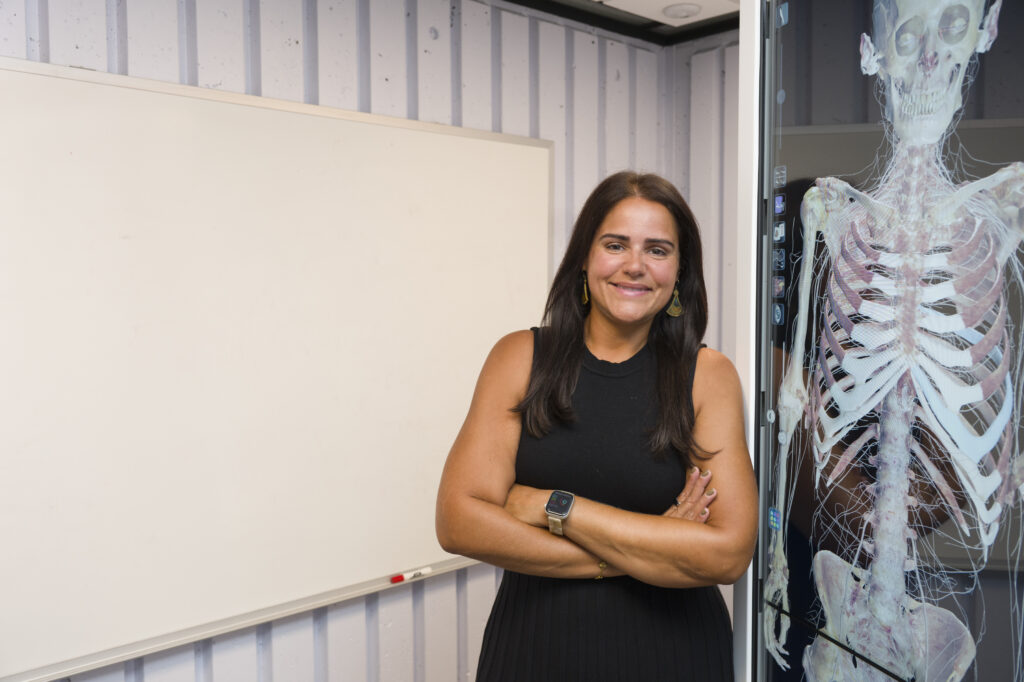
Rutgers School of Health Professions Department of Health Informatics is staying on the cutting-edge of data science with a new, one-year certificate program on Artificial Intelligence in health care.
Our 18-credit program quickly builds competencies through hands-on application of artificial intelligence techniques and tools. Such skills are becoming increasingly necessary in both clinical decision-making as well as health care information management and data analytics.
SHP DOCTORAL RECIPIENTS PAVING THE WAY FOR WOMEN OF COLOR IN HEALTH CARE
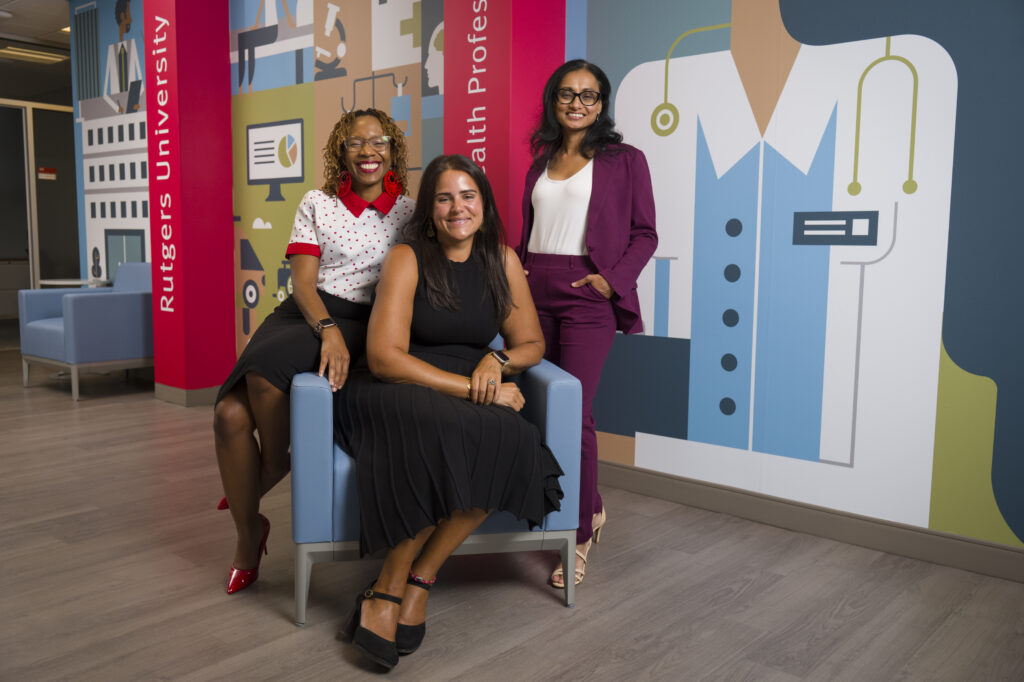
An emergency room physician assistant, faculty member, and mother of two, Dipali Yeh found the thought of pursuing a doctoral degree daunting. But when Rutgers University joined the Big Ten and the School of Health Professions dean urged faculty to get doctoral degrees to tap into new research funding, Yeh realized how badly she wanted it.
Seven years later, in May, Yeh stood in her graduation gown, her Ph.D. finally in hand. As a first-generation immigrant, she had achieved a milestone. She had also become one of a small group of women of color in the physician assistant department who in the past year all earned their doctoral degrees, joining colleagues Jessica Gomes and Nkechi Mbadugha, both children of immigrants.