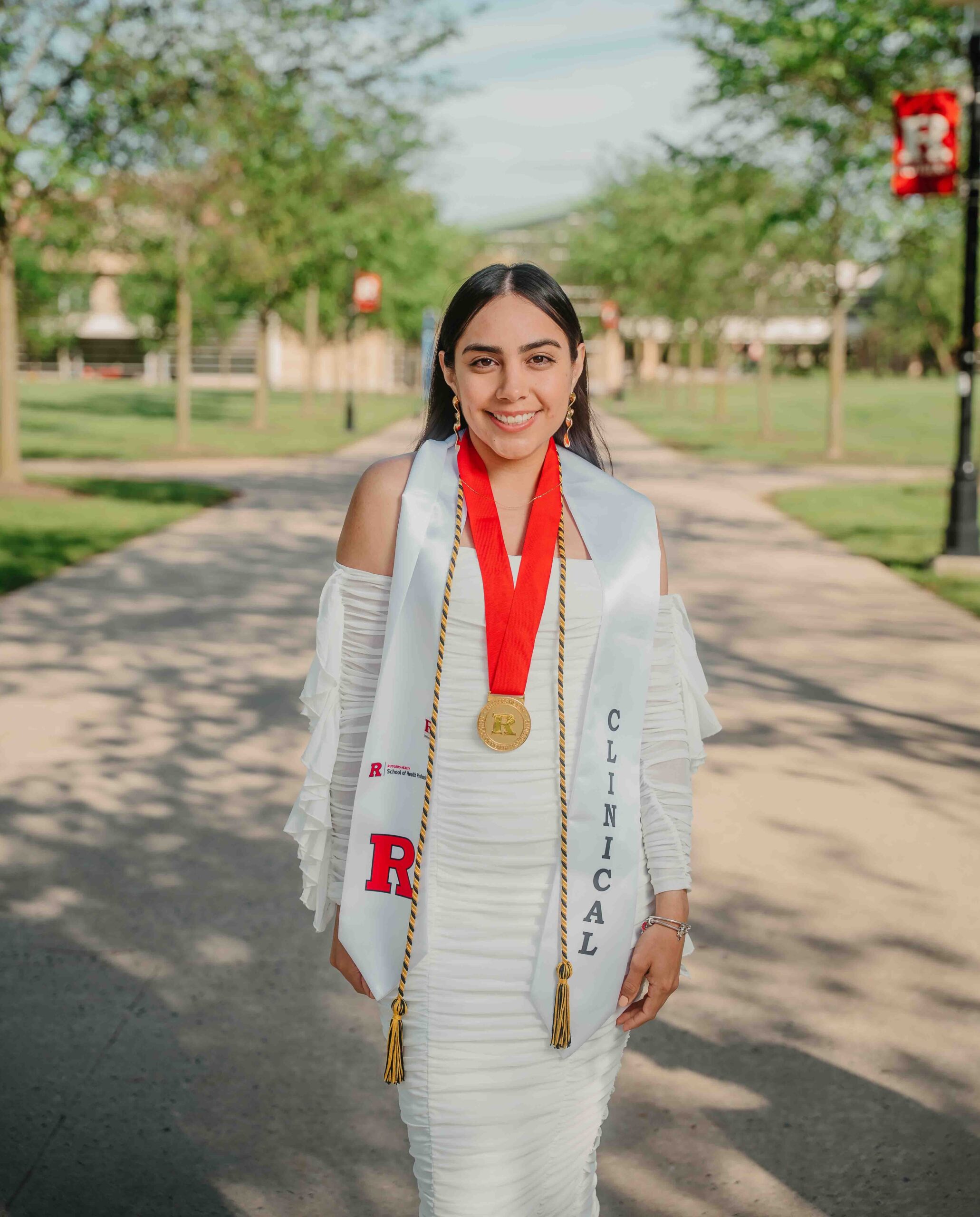
But for Sanguino Dugarte, that level of hard work and perseverance has been a constant since she left Venezuela for the United States at age 19.
Born and raised in Venezuela, it wasn’t her plan to move abruptly to a new country alone, not even speaking the language. She was studying and preparing to start medical school. She hoped to visit New York with money saved from selling handmade jewelry.
“I thought I would spend summer break in the U.S. and start to learn some English,” said Sanguino Dugarte. “I planned to finish my education in Venezuela, but staying there became impossible due to the political situation and circumstances beyond my control.”
In New York, she stayed with a friend who had also left Venezuela due to political and socioeconomic unrest. Her fear of being in a new country and knowing very little of the language was washed away by the sense of freedom she felt far from the dangers of her home country.
Before long, Sanguino Dugarte began the process of changing her visa status to be able to work. She got a job as a cashier at a restaurant, which became a crash course in learning the English language.
“It was hard at first because people speak so fast. I would write down the names of the streets walking to and from work, and I spent hours on YouTube and Google just listening to phone numbers and looking at streets,” she said.
As she became more confident in her English, Sanguino Dugarte set her sights on a new goal: continuing her education in the U.S. rather than returning to Venezuela. She earned a scholarship to a New York college and began her associate’s degree in medical assisting.
“Since high school, I have always been interested in health care. My aunt is a pediatrician, and would help me study biology,” said Sanguino Dugarte.
She recalled opening her first textbook and bursting into tears, thinking she would not be able to make it. Working full-time at the restaurant while also carrying a full course load to keep her scholarship, Sanguino Dugarte persevered, sometimes translating her textbooks word-by-word.